Things to Do in Hakone: The Loop, Owakudani, Lake Ashi and a Night in the Hot Springs
What the Hakone Freepass costs since the October 2025 price change, how the Hakone loop runs and when it stops, where to see Mt. Fuji, the sights with current fees, and the self-guided routes that stay a night here.
Hakone is the mountain hot-spring area 80 minutes from Shinjuku that nearly every first trip to Japan tries to fit in: a steaming volcanic valley, Lake Ashi with Mt. Fuji behind it on a clear day, a shrine gate standing in the water, fine museums, and a chain of railways, cable cars and boats that join it all into a loop.
The list of things to do in Hakone is not the hard part. The clock is. The ropeway and the boats stop in the late afternoon, the weather decides whether you see Mt. Fuji, and the hot springs are at their best after the day-trippers leave.
That is why eleven of our self-guided routes don't pass through Hakone but sleep there, and this guide is built around doing it that way.
Quick Answer: Hakone
- Getting there: 80 minutes from Shinjuku by Romancecar, or 33 minutes by Shinkansen to Odawara.
- The pass: the Hakone Freepass covers the Hakone loop — train, cable car, ropeway, pirate ship and buses. ¥6,000 for two days from Odawara, ¥7,100 from Shinjuku, since October 2025.
- The clock: the Hakone Ropeway runs 9:00–17:00 from February to November and 9:00–16:15 in December and January.
- How long: one night — the bath, and a second chance at a clear morning view of Mt. Fuji.
- On our routes: eleven stay a night here with the Hakone Free Pass included, from the 7-day EX003 (from $3,000).
From Shinjuku
≈ 80 min
Freepass
from ¥6,000
Ropeway
9:00–17:00
Our routes
11 stay here
Is Hakone Worth Visiting? Day Trip or Overnight
Yes. The Hakone area is one of Japan's most popular destinations for good reason.
It has a working volcano at Owakudani, Lake Ashi in an old crater, an ancient shrine on the shore, a stretch of the Edo-period Tokaido highway, great museums, and more hot springs than anywhere else with such easy access from Tokyo.
A day trip is possible — our hour-by-hour Hakone day trip shows how. But the Hakone loop takes most of a day on its own, the ropeway stops at 17:00, Mount Fuji is most often clear early in the morning, and the onsen is at its best in the evening.
A night solves all four. You arrive by early afternoon, do the loop while it runs, bathe before dinner, and get a second morning in case the mountain hid the first time.
It costs almost no travel time either: Hakone sits on the way from Tokyo to Kyoto, and you rejoin the Shinkansen at Odawara the next morning.
From our Japan travel team
If you only have one night here, make it the one after the loop rather than before it. Come up by early afternoon, do the ropeway and the lake while they are running, and let the evening be the bath and dinner. If you would rather do the loop in the morning, that works too — tell us and we will suggest how to shape the day.
The Hakone Freepass: Prices Since October 2025
The Hakone Freepass (often written Hakone Free Pass) is sold by Odakyu. It covers the Hakone Tozan Railway, the Hakone Tozan Cable Car, the Hakone Ropeway, the pirate ships on Lake Ashi and the Tozan and Odakyu buses on designated sections, with discounts at many museums and sights. The Shinjuku version adds the Odakyu train from Tokyo and back.
Prices went up on 1 October 2025, so anything quoting ¥5,000 or ¥6,100 is out of date:
| Hakone Freepass | 2 days | 3 days |
|---|---|---|
| From Odawara | ¥6,000 adult · ¥1,500 child (6–11) | ¥6,400 adult · ¥1,750 child (6–11) |
| From Shinjuku (includes the Odakyu round trip) | ¥7,100 adult · ¥1,600 child (6–11) | ¥7,500 adult · ¥1,850 child (6–11) |
It does not cover the Romancecar limited express fee (¥1,200 each way, ¥1,150 ticketless) or Izu-Hakone buses, which share some roads.
Check the operator before you board. Child fares are for ages 6 to 11 (6 and over, under 12).
Is it worth it? The four legs of the Hakone loop come to ¥4,590 at single fares before the train up from Odawara and the bus back, so yes. On every one of our Hakone routes it is already included.
The Hakone Loop: How the Circuit Works
The Hakone loop is a circuit you can do in either direction. Most people go counter-clockwise: up by rail, across by ropeway and boat, and back by bus. Both hotels our routes use are on the Yumoto side, so the Hakone loop starts and ends near your room.
| Leg | Time | Single adult fare (all covered by the Freepass) |
|---|---|---|
| Tozan Railway: Hakone-Yumoto → Gora | About 40 min, 8.9 km | ¥460 |
| Cable car: Gora → Sounzan | About 10 min | ¥430 |
| Hakone Ropeway: Sounzan → Owakudani → Togendai | Two sections | ¥2,000 one way |
| Sightseeing cruise: Togendai → Hakone-machi or Moto-Hakone | About 25–40 min | ¥1,700 |
| Tozan bus: Moto-Hakone → Hakone-Yumoto | Back down the mountain | Varies by stop |
The Hakone Tozan Train From Hakone-Yumoto Station to Gora
From Hakone-Yumoto station the Hakone Tozan Railway climbs 8.9 km to Gora in about 40 minutes, on gradients so steep the train reverses up three switchbacks. From about mid-June the line is lined with hydrangeas.
Get off one stop before Gora station, at Chokoku-no-Mori, for the Hakone Open-Air Museum. The Fujiya Hotel is at Miyanoshita, halfway up.
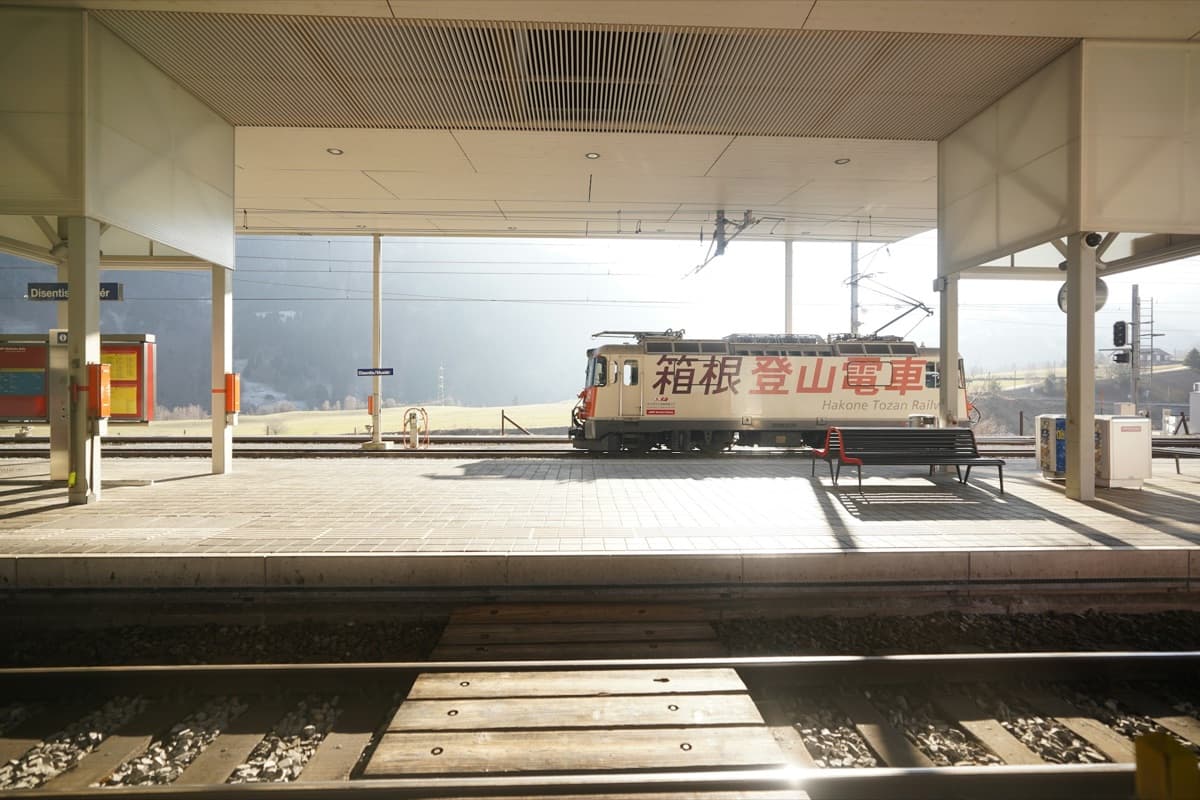
Gora Station and the Cable Car to Sounzan
At Gora station you change to the cable car, running since 1921, which hauls you 209 m up to Sounzan station in about ten minutes. Gora Park sits beside its lower stations, an easy half hour if the queue at Gora station is long.
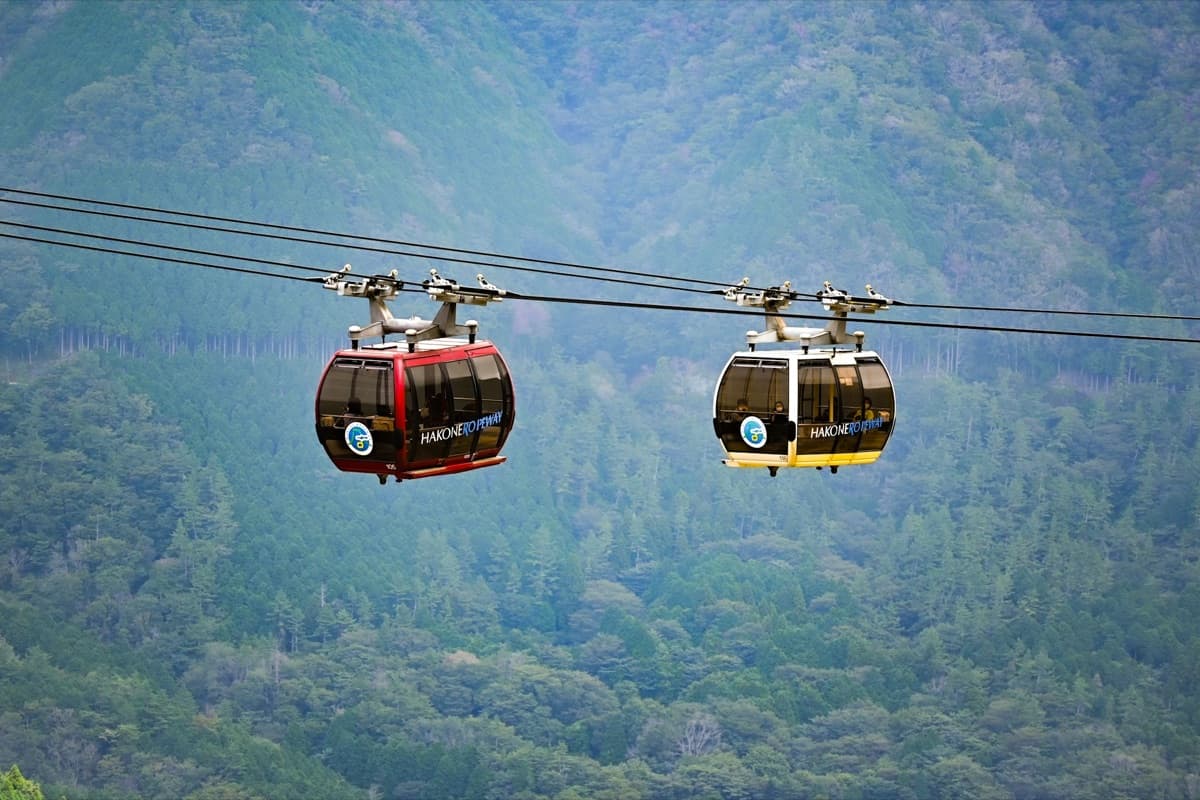
The Hakone Ropeway
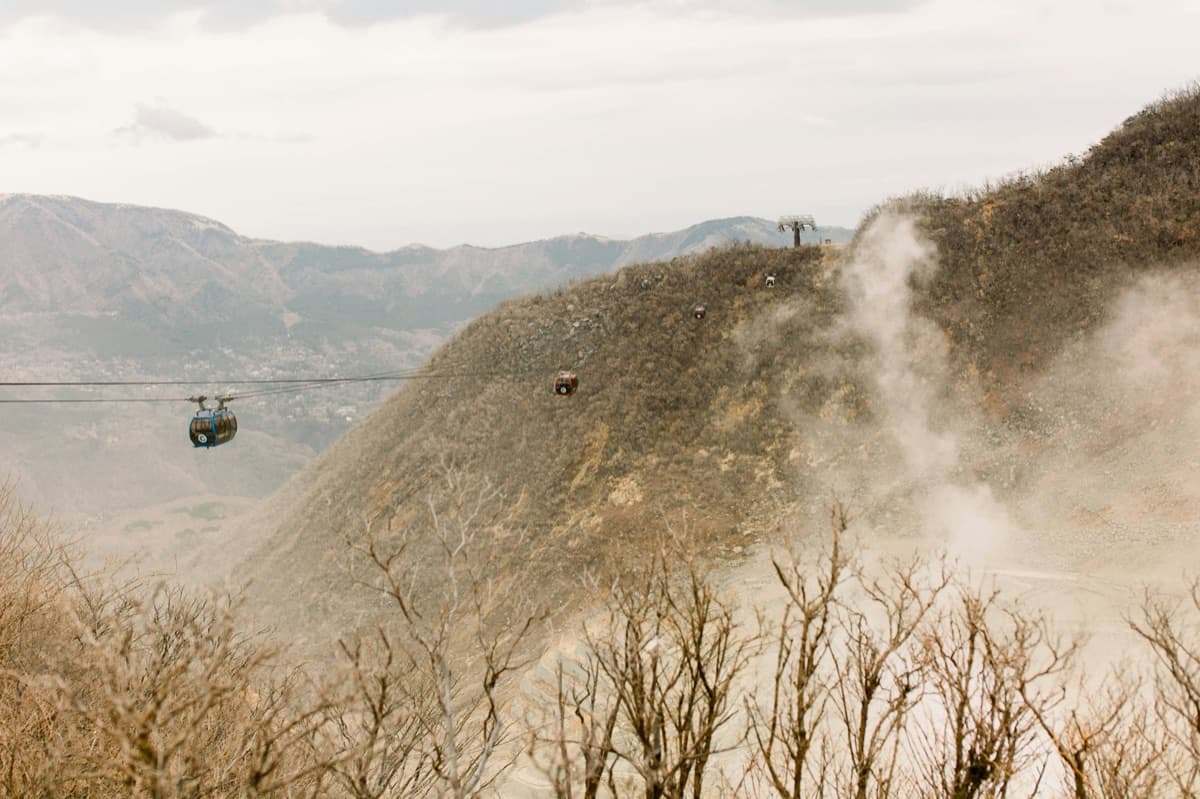
At Sounzan station the Hakone Ropeway takes over. Gondolas leave about every minute and cross the ridge to Owakudani, with panoramic views over the valley, before dropping to Togendai on the lake.
The ropeway runs 9:00–17:00 from February to November and 9:00–16:15 in December and January. That is the hour that decides your day, so be on it by early afternoon.
Back Down by Bus
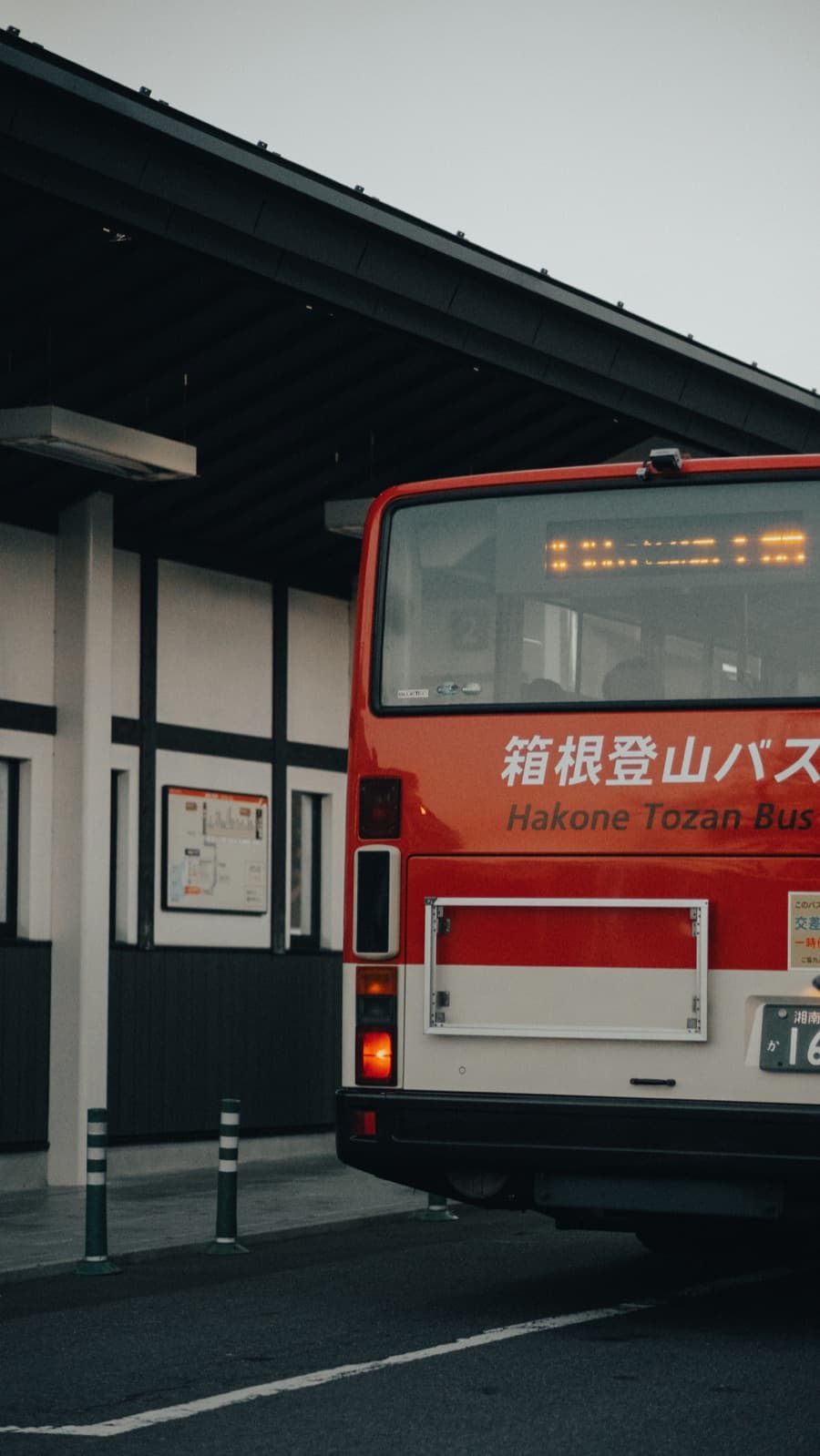
From Hakone-machi or Moto-Hakone port, the Tozan bus takes you back down the mountain to Hakone-Yumoto station to close the Hakone loop. Izu-Hakone buses run on the same roads, so board the Tozan one if you are using the Freepass.
Owakudani: The Volcanic Valley and the Black Eggs
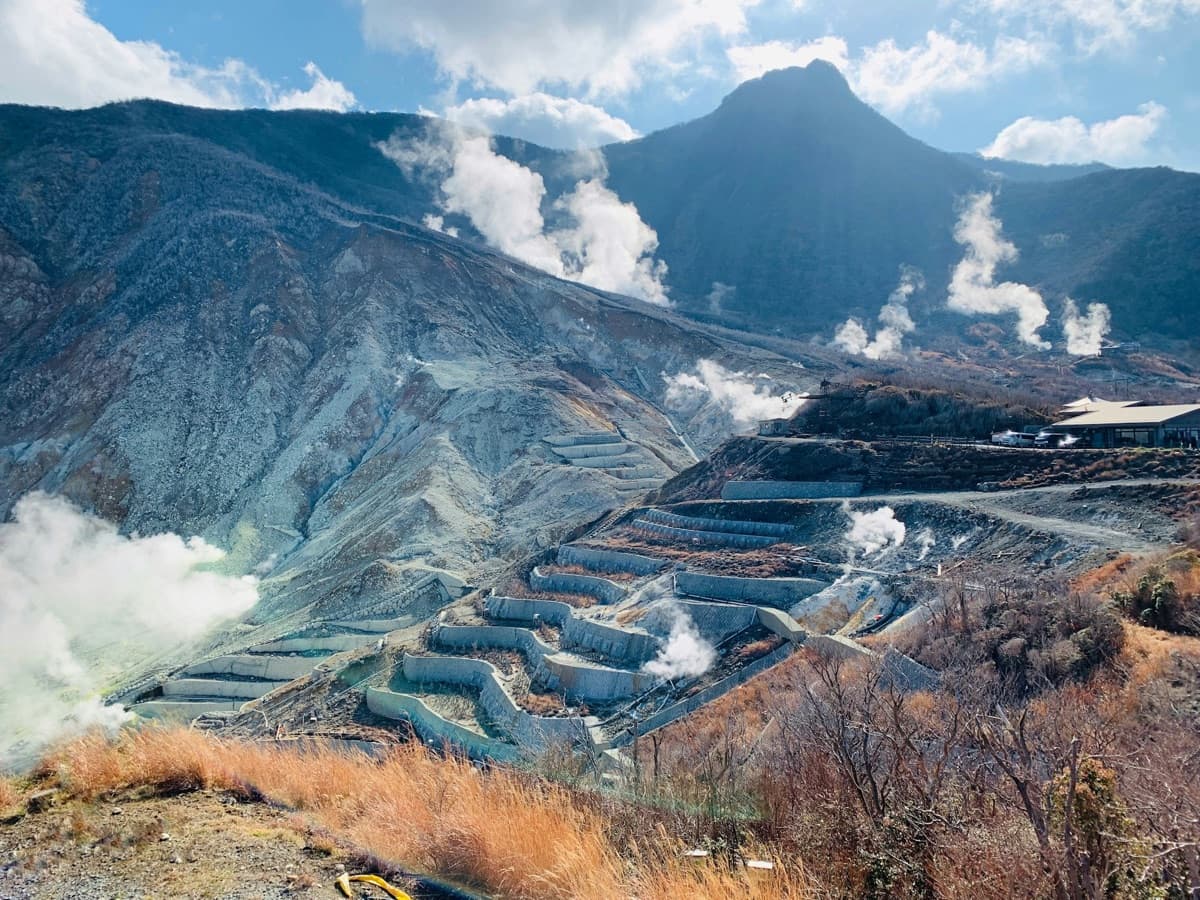
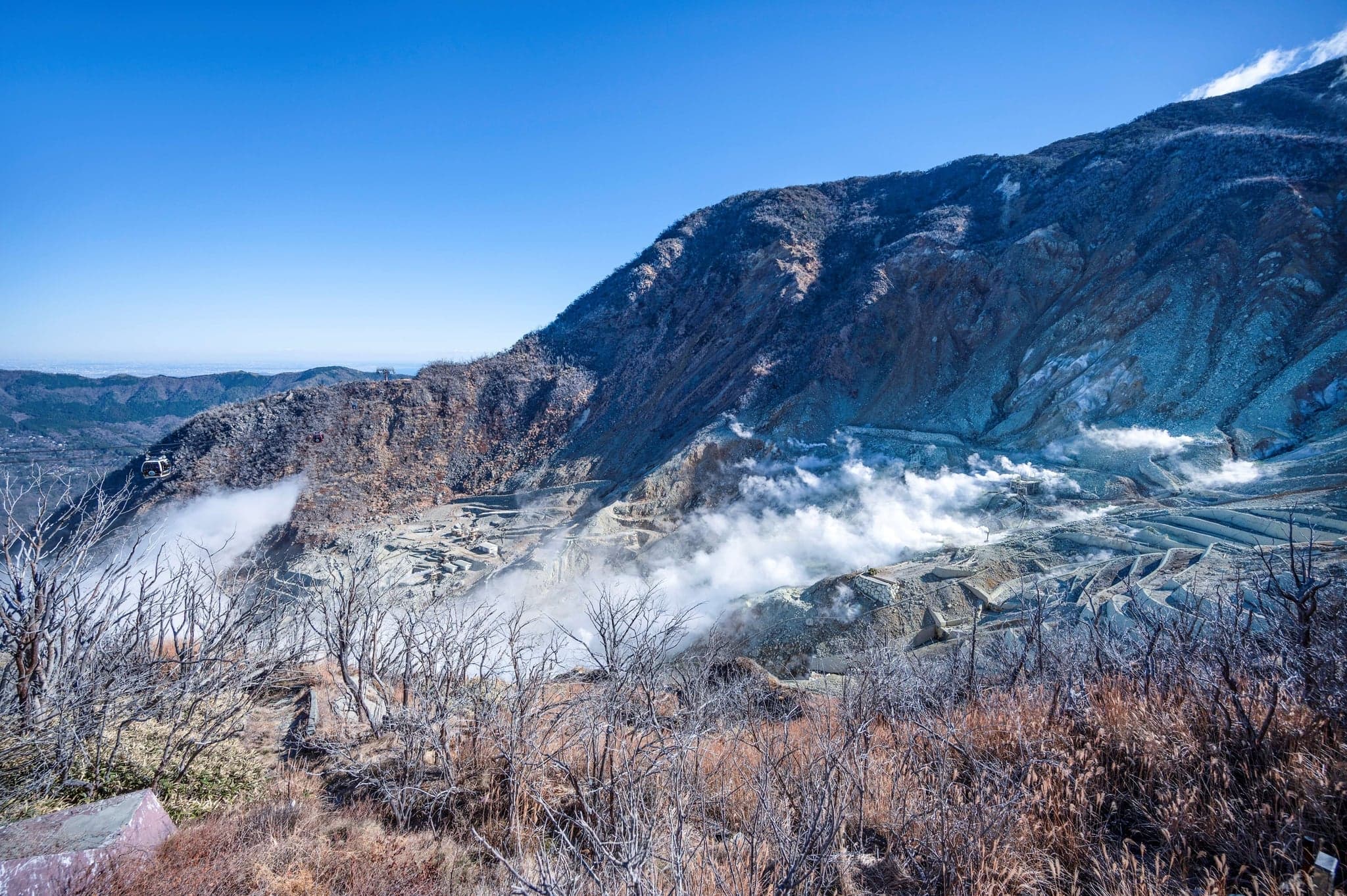
Owakudani is the steaming crater area of Mount Hakone. From the ropeway you look straight down into the Owakudani valley: yellow-stained slopes, vents hissing sulphur, and on a clear day Mt. Fuji over the ridge.
The Black Eggs
The black eggs, kuro-tamago, are boiled in the hot spring water until the shells turn black. They sell four for ¥500 from 9:00 to 16:40.
Local lore says each one adds seven years to your life, so eat them on the terrace with the steam behind you.
Is Owakudani Open?
Owakudani is an active volcano. As of 23 September 2026 the Japan Meteorological Agency has Hakone at volcanic alert level 1, the lowest, and the ropeway runs without volcanic restrictions.
The hiking trail from Komagatake to Owakudani is closed, and the guided nature trail into the vents needs a web reservation and ¥800. Check the ropeway status on the morning you go.
Lake Ashi: The Pirate Ships and Hakone Shrine
The Pirate Ships
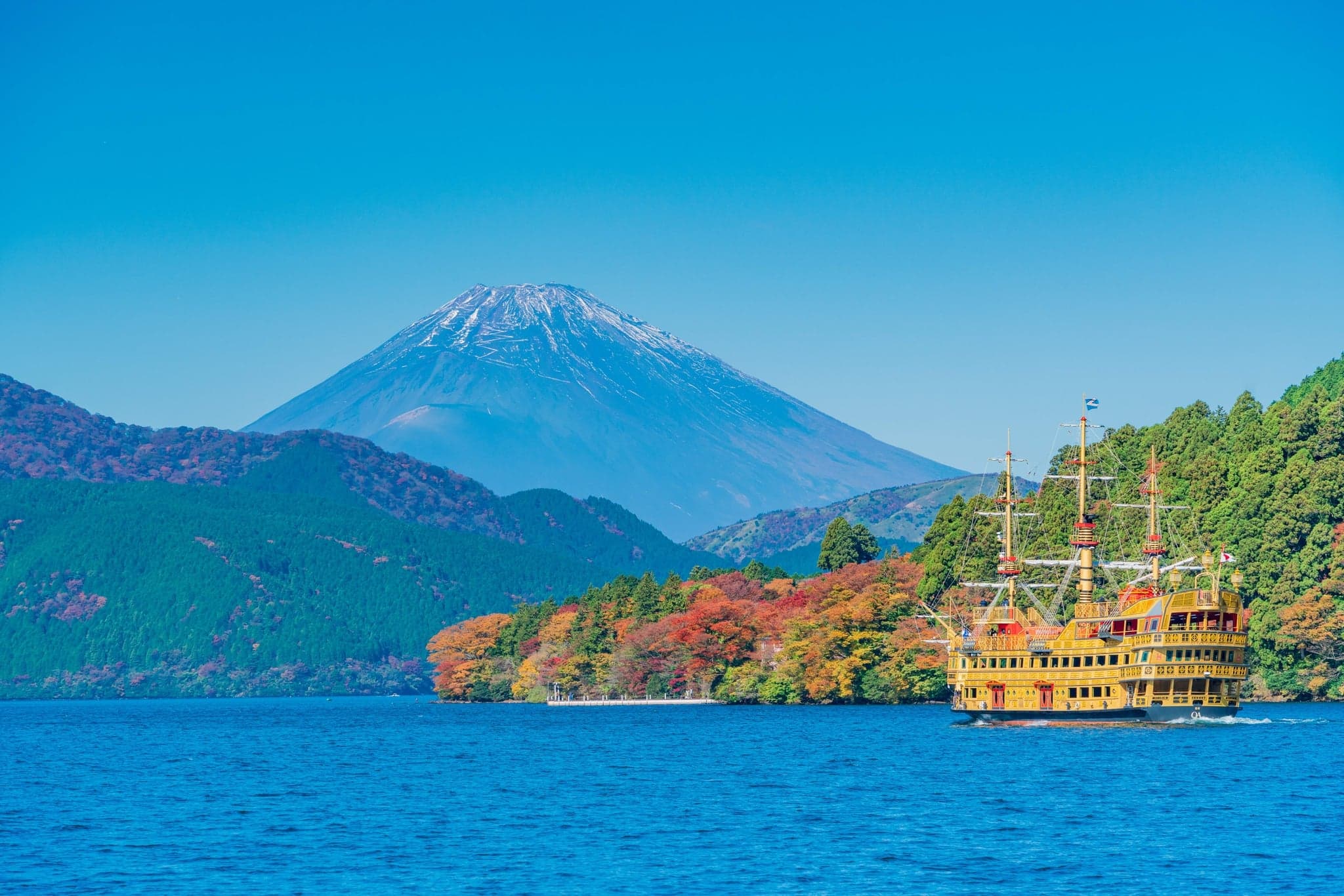
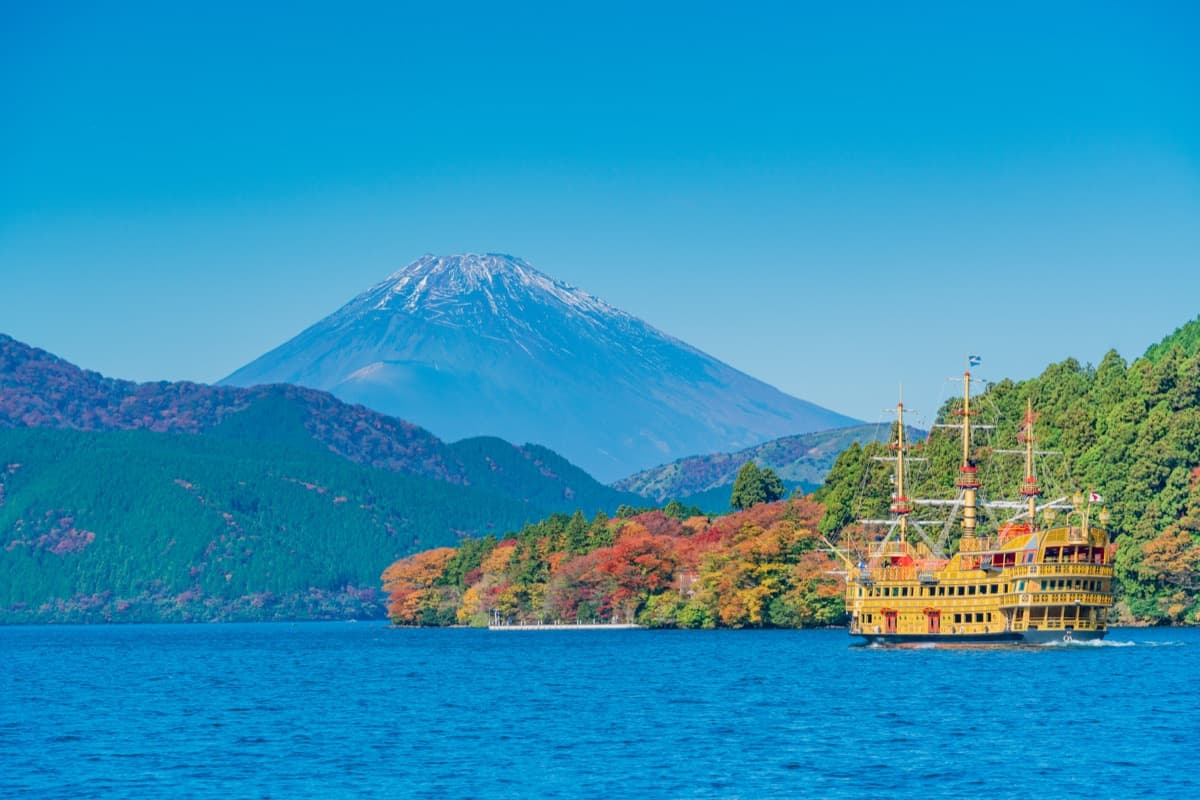
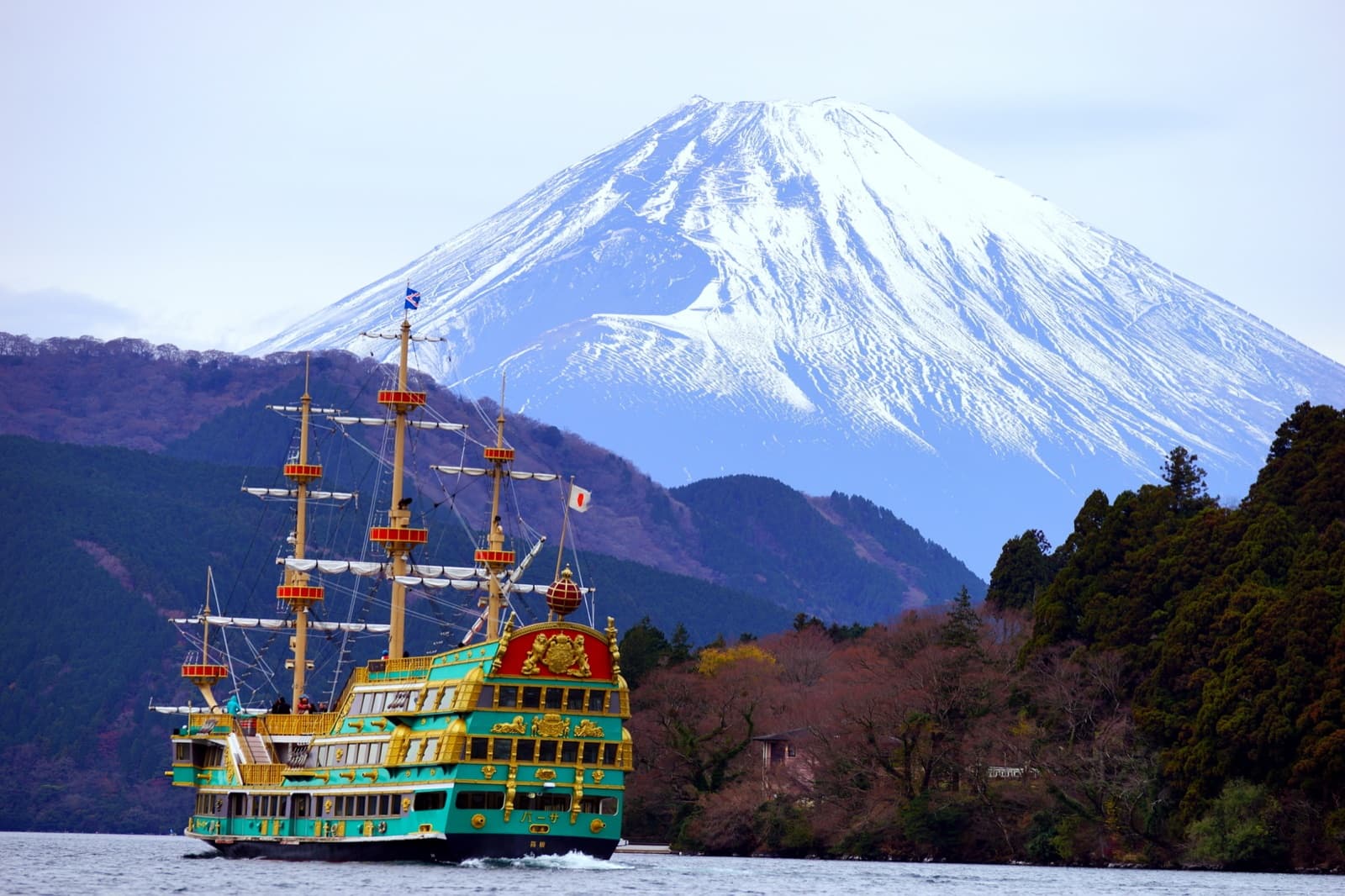
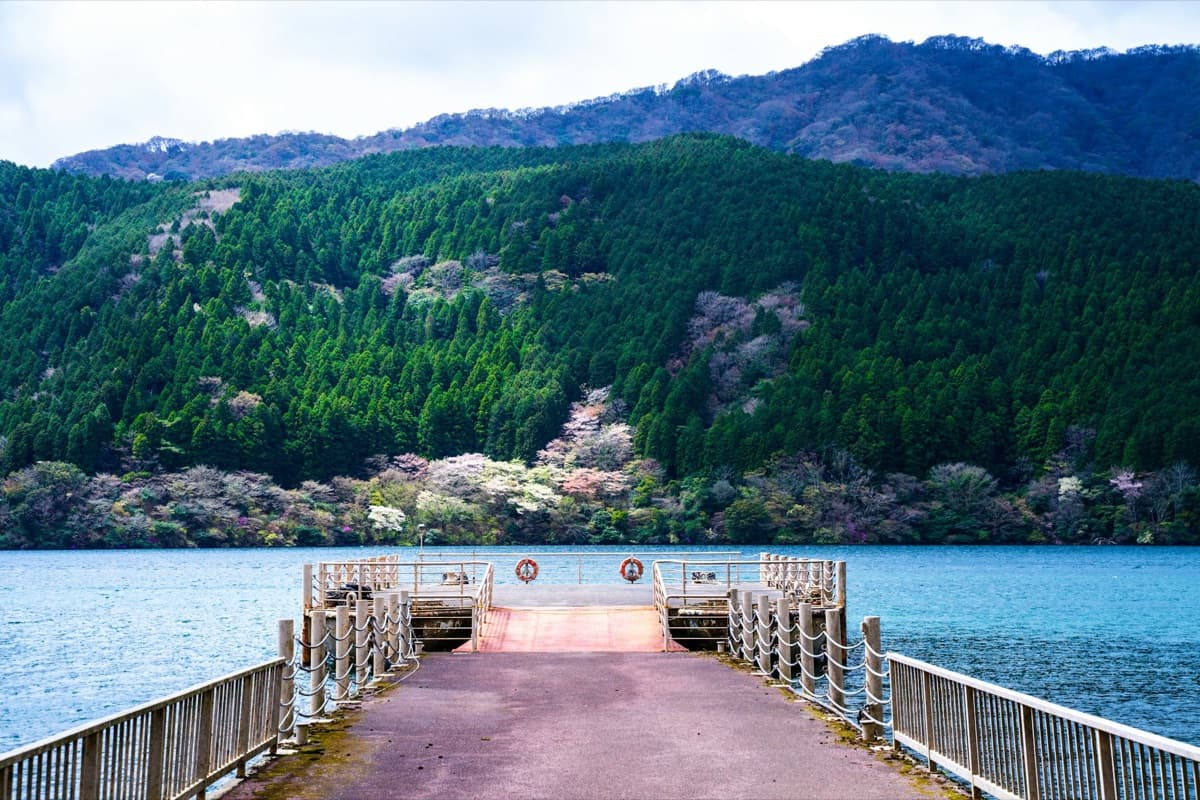
Lake Ashi (Lake Ashinoko) fills an old crater, and the best way to experience Lake Ashi is from the water. From Togendai the Hakone Sightseeing Cruise crosses to Hakone-machi and Moto-Hakone port in about 25 to 40 minutes, on boats dressed as pirate ships.
The pirate ships are more than just transport: from the deck you get the lake, the mountain views on every side and, when it is out, Mt. Fuji at your back.
From 20 March to 30 November the pirate ships leave Togendai from 9:30 until 17:00, roughly every 35 to 40 minutes.
The last boat back from Moto-Hakone is at 16:30, and a winter timetable runs from 1 December to 19 March. The fare is ¥1,700 one way.
Hakone Shrine and Its Torii Gates
Hakone Shrine is just a stone's throw from Moto-Hakone port. The approach is a series of torii gates: the first spans the main road at the entrance to Moto-Hakone, the second stands at the back of the village, and the third marks the start of the shrine approach.
Beyond it, a level path runs through old cedars to the fourth of the torii gates and a flight of about 90 stone steps, with a side path for anyone who would rather avoid the stairs. The fifth gate stands at the top, before the vermilion shrine buildings.
Down at the water, the Peace Torii, built in 1952, stands in Lake Ashi itself.
It is the Hakone picture everyone wants, and on busy days there is a line along the jetty to take it — another reason to be here early.
The Cedar Avenue and the Hakone Checkpoint
From Moto-Hakone, the old Tokaido cedar avenue makes a peaceful walk: more than 400 cedars along about 500 m of the Edo-period highway. It leads past Onshi Hakone Park, on a small headland with one of the best Mt. Fuji views across Lake Ashi.
At the end, by Hakone-machi, is the Hakone Checkpoint (Hakone Sekisho), where the shogunate inspected travelers between Edo and Kyoto, rebuilt on its original site. Entry is ¥500, or ¥400 with the Freepass.
The Komagatake Ropeway
On the east shore of Lake Ashi, the Komagatake Ropeway rises from Hakone-en to the summit of Mount Komagatake, where Hakone Shrine's inner shrine stands. It reopened in April 2025 as "Ashi no Sora". The ride is about seven minutes and the summit gives 360-degree panoramic views over the lake to Mt. Fuji.
Cars run every 20 minutes from 9:00, with the last one up at 16:30 and down at 16:50.
The Komagatake Ropeway costs ¥2,200 return. It is run by a different company and is not on the Freepass list.
Mount Fuji Views: When and Where to See Mt. Fuji
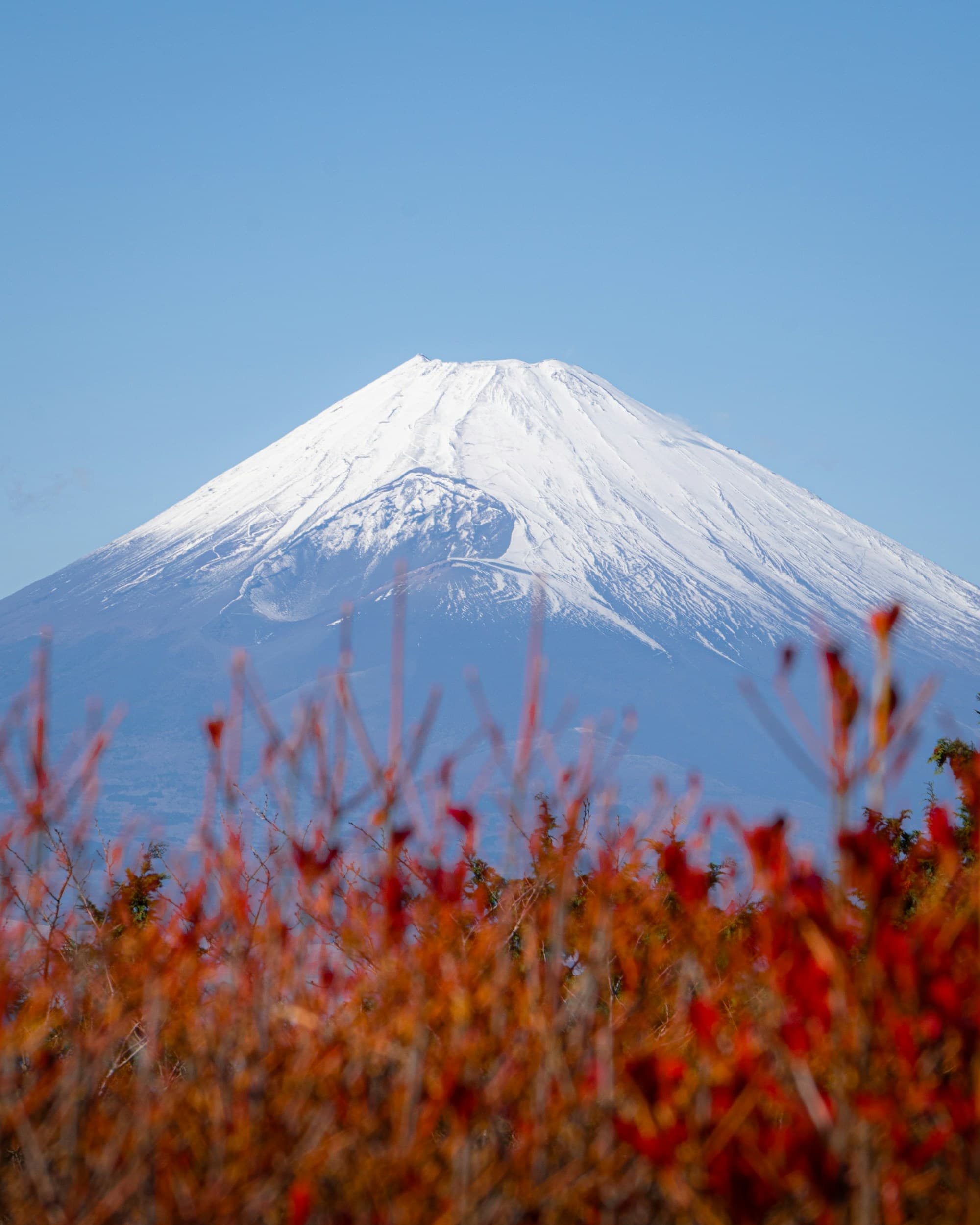
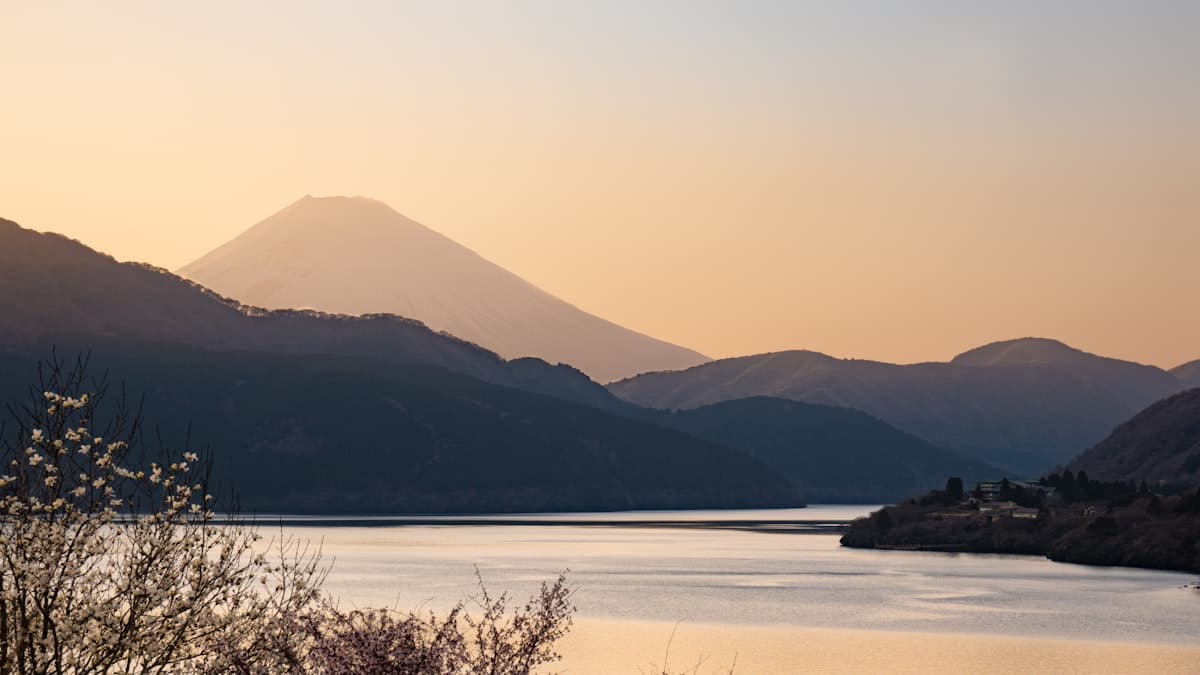
On a clear day Mount Fuji rises above the hills beyond Lake Ashi. The best Mt. Fuji views are from the pirate ships, the Peace Torii jetty, the headland park by the cedar avenue, the Owakudani viewing area and the Komagatake summit.
Hakone's own tourism site recommends winter for distant views, when the air is cold and clear. In the warmer months cloud often builds by midday, so the early morning is your best chance — the strongest argument for a night here.
If Mt. Fuji itself is the point of your trip, Kawaguchiko sits right at its foot.
More Things to Do in Hakone: Museums and Gardens
These are the other things to do in Hakone worth your time. Decide in advance whether your afternoon is art or the lake — you rarely do both well.
| Place | Admission (adult) | Hours |
|---|---|---|
| Hakone Open-Air Museum | ¥2,000 (¥1,800 online) | 9:00–17:00 daily; last entry 16:30 |
| Owakudani | Free; black eggs 4 for ¥500 | Ropeway hours; eggs sold 9:00–16:40 |
| Hakone Gora Park | ¥650; free with the Freepass | Mar–Nov 9:00–17:00; Dec–Feb 9:30–16:30 |
| Pola Museum of Art | ¥2,200 | 9:00–17:00; last entry 16:30 |
| Hakone Shrine | Grounds free; Treasure Hall ¥500 | Treasure Hall 9:00–16:30 |
| Hakone Checkpoint | ¥500 (¥400 with the Freepass) | 9:00–17:00; Dec–Feb to 16:30 |
| Komagatake Ropeway | ¥2,200 return · ¥1,300 one way | 9:00 to 16:30 up, 16:50 down; every 20 min |
The Hakone Open-Air Museum
If you only do one museum, make it this one. The Hakone Open-Air Museum sets around 120 works by modern and contemporary sculptors across a hillside, and owns 26 sculptures by Henry Moore, one of the largest collections of his work in the world.
Don't miss the Symphonic Sculpture, a stained-glass tower by Gabriel Loire that you climb inside.
Children head for the Woods of Net, a giant knitted play sculpture, and there are footbaths fed by the hot spring. Allow two hours.
Pola Museum of Art and Sengokuhara
The Pola Museum of Art is a glass building sunk into beech forest at Sengokuhara, with French Impressionists, Japanese painting and a woodland path behind it. The Hakone Venetian Glass Museum is nearby.
Sengokuhara is the grassland north of the lake. From late September to mid-November its hillside of susuki pampas grass turns silver-gold, one of the quietly spectacular sights of autumn in Hakone.
Gora Park and Hakone-Yumoto
Hakone Gora Park is a French-style park of manicured gardens, with a fountain, a rose garden and greenhouses at the top of the Tozan line — free with the Freepass.
Down in Hakone-Yumoto, the street by the station sells fish cakes, manju and green tea sweets — souvenirs on the way out.
The Onsen Night: Ryokan, Hot Springs and What It Costs
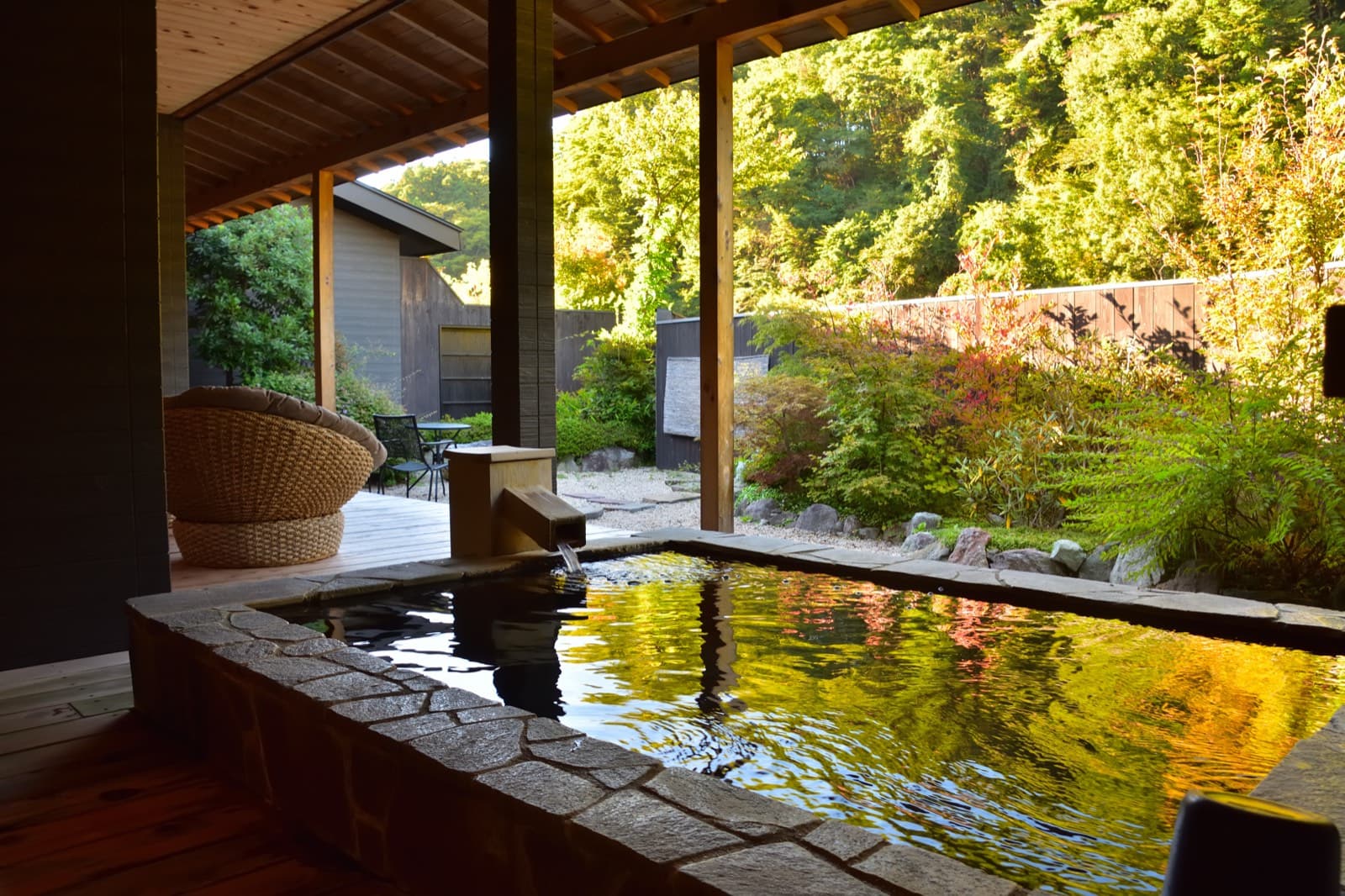
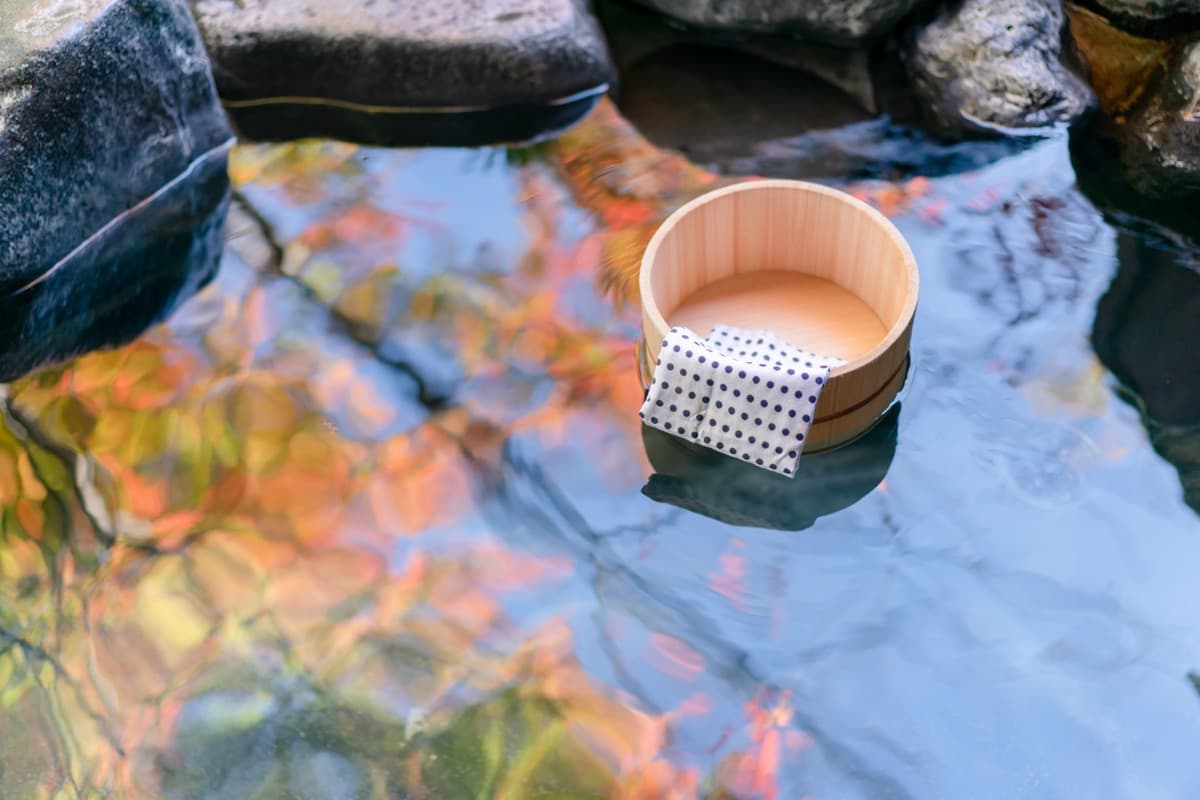
Hakone has more than a dozen separate hot springs from Yumoto up to Sengokuhara, and an overnight stay is how you get the most out of them.
Ryokan or Hotel?
A traditional ryokan means Japanese-style rooms with tatami, dinner in courses, and a hot spring bath you can use late at night and again before breakfast.
A classic hotel like the Fujiya, serving travelers since 1878, puts Western rooms on the same spring water.
Many ryokan and hotels have a shared public bath, open-air baths with mountain views and private baths to book, and some keep adults-only rooms — worth checking if you travel with children. Our guide to ryokan with a private onsen explains how those work.
Bathing Tax and Etiquette
Hakone levies a bathing tax of ¥150 per person per night on hotel guests (¥50 for day bathers). A separate lodging tax of ¥350 is planned from April 2028 but is not in force yet.
New to a shared hot spring bath? The onsen etiquette guide covers the rules: wash first, no swimsuits, towels out of the water.
Planning Your Hakone Trip: One Night, Hour by Hour
This is how we suggest you plan your trip through Hakone on the way from Tokyo to Kyoto, on the Freepass alone. On a day trip, the same order works from 10:00 to 17:00.
- Late morning: Shinkansen to Odawara, then the Hakone Tozan line to Hakone-Yumoto station.
- Around noon: up to the Open-Air Museum, then lunch near Gora station.
- Early afternoon: cable car and Hakone Ropeway to Owakudani for the black eggs, then down to Togendai.
- Late afternoon: a pirate ship across Lake Ashi to Moto-Hakone, and the bus back down.
- Evening: the hot spring bath before dinner, and again before bed.
- Next morning: Hakone Shrine and the Peace Torii early, then the Shinkansen west from Odawara.
On autumn weekends the Hakone loop is at its busiest: Hakone is Tokyo's favorite escape.
Getting to Hakone From Tokyo
By Romancecar From Shinjuku
The Odakyu Electric Railway runs the Romancecar direct from Shinjuku station to Hakone-Yumoto station in about 80 minutes. The fare is ¥1,270 plus a ¥1,200 limited express fee; the Freepass from Shinjuku covers the fare but not the fee. Seats are reserved, so book early on weekends.
By Shinkansen to Odawara
The Shinkansen from Tokyo to Odawara takes about 33 minutes on a Hikari or Kodama (the Nozomi does not stop there).
Change there for Hakone-Yumoto station. If you are going on to Kyoto, this is the natural route — see our Tokyo to Kyoto guide.
JR Pass? Only as far as Odawara. The railways, ropeway, boats and buses inside Hakone belong to the Odakyu group and need the Freepass or single tickets.
Luggage
Don't take a big suitcase round the Hakone loop. On our routes it goes from your Tokyo hotel straight to Kyoto, and you travel with an overnight bag — see our luggage forwarding guide.
Traveling independently? The Hakone Carry Service at Hakone-Yumoto station takes bags to your hotel the same day for ¥1,500 a piece, dropped off by 12:00 and waiting from 15:00.
When to Visit Hakone
- Spring (late March–May): cherry blossoms around Lake Ashi, then fresh green.
- June–July: the rainy season, and hydrangeas along the Tozan line from about mid-June. Mt. Fuji is often hidden.
- Autumn (late September–November): the Sengokuhara grass, then the autumn leaves — our Hakone autumn leaves guide has the timing. The busiest season.
- Winter (December–February): the clearest air and the best Mt. Fuji views; the ropeway closes at 16:15.
Whatever the month, visiting Hakone midweek beats Saturdays and holidays. If you are visiting Hakone in autumn, book early.
Where Our Routes Stay in Hakone
Our routes use two hotels in Hakone, both on the Yumoto side of the Hakone loop and both with their own hot springs — the Nanpuso has large indoor and open-air baths, and the Fujiya uses Miyanoshita Onsen water. The Hakone Free Pass is included on every route; dinner is included on some and not others.
| Hotel | Where | Routes | Dinner included |
|---|---|---|---|
| Hotel Nanpuso | Okuyumoto, 7 min by Tozan bus from Hakone-Yumoto station | GR007, GR009, FG001, FG002, HS002, SK009, SL007 | On GR009, HS002, SK009 |
| The Fujiya Hotel | Miyanoshita, 7 min on foot from the station | EX003, GR107, GR109; HS003 for two nights | On EX003, GR109, HS003 |
Interested in a tour? Click a route code above, or search for it in the top-right Search bar.
On GR007, FG002 and SL007 the hotel shuttle to Hakone-Yumoto station on the morning you leave is ¥200, paid locally. Entrance fees are not included on any route.
Self-Guided Routes With a Hakone Night
Eleven of our routes stop in Hakone, almost all for one night between Tokyo and Kyoto. These seven cover the range.
The deluxe versions of GR007 and GR009 (GR107 and GR109) stay at the Fujiya, and SL007 is the solo version of GR007. Prices are per person and move with season and room type.
| Route | Length | From (per person) | Shape |
|---|---|---|---|
| Zen & Mt. Fuji Experience (EX003) | 7 days | $3,000–3,700 | Hakone night with dinner, a chartered-taxi day around Mt. Fuji, Kyoto |
| Sea of Serenity: Kashikojima & Cultural Japan (GR007) | 13 days | $3,700–5,200 | Hakone, Ise-Shima, Kyoto, Okayama, Hiroshima |
| Spirit of Tradition: Shirakawa-go & Cultural Japan (GR009) | 14 days | $4,100–5,900 | Hakone night with dinner, Takayama, Kyoto, Nara, Miyajima |
| Family Holidays: Family Journey to Japan’s Classics (FG002) | 13 days | $2,900–4,300 | Family rooms; Hakone, Osaka, Takayama |
| Hop Through Japan’s Hot Springs & Highlights (HS002) | 14 days | $4,300–5,700 | Four onsen nights with dinner: Hakone, Kinosaki, Shirakawa-go, Gero |
| The Art of Onsen: A Premium Japan Experience (HS003) | 11 days | $5,500–7,600 | Two Hakone nights with dinner, then Kyoto and Kinosaki |
| Hakuba Ski & Popular City Journey (SK009) | 13 days | $4,700–6,000 | Hakuba skiing, Kanazawa, Kyoto, a Hakone night with dinner |
Interested in a tour? Click the route name above, or search by route code in the top-right Search bar.
Building your own trip instead? Our day trips from Tokyo guide compares Hakone with Nikko, Kamakura and the Fuji Five Lakes.
From our Japan travel team
Hakone is the stop where the weather decides the day. If Fuji is hidden when you arrive, the museum and the bath are still there, and the next morning is often clearer. If a second night would make the trip, ask us and we will quote it.
FAQ: Hakone
What are the best things to do in Hakone?
Ride the Hakone loop by train, cable car, ropeway and pirate ship, then see Hakone Shrine, the Open-Air Museum, and end the day in a hot spring.
Is one day enough for Hakone?
For the loop, yes. But a day trip leaves out the evening onsen and gives you one chance at Mt. Fuji. One night is the better trip.
How much is the Hakone Freepass?
Since 1 October 2025: ¥6,000 for two days from Odawara (¥1,500 for children aged 6–11) or ¥7,100 from Shinjuku (¥1,600 for children aged 6–11); three days is ¥6,400 or ¥7,500. The Romancecar fee (¥1,200) is extra.
How do you get to Hakone from Tokyo?
The Romancecar from Shinjuku to Hakone-Yumoto takes about 80 minutes. Or take the Shinkansen to Odawara, about 33 minutes on a Hikari or Kodama, and the Tozan line up.
Is Owakudani open?
As of 23 September 2026 Hakone is at volcanic alert level 1, the lowest, and the Hakone Ropeway runs through Owakudani without volcanic restrictions. The Komagatake–Owakudani hiking trail is closed.
What time does the Hakone Ropeway run?
9:00 to 17:00 from February to November and 9:00 to 16:15 in December and January. It is ¥2,000 one way, covered by the Freepass.
Fares, hours and fees were checked on 23 September 2026 against Hakone Navi (Odakyu), the Japan Meteorological Agency and each sight's own site. Hotels and prices are from our catalogue on the same date.
A Night in the Hakone Hot Springs, Arranged
Our routes give you a night in Hakone with the Freepass, a hotel with its own hot springs, and your luggage sent ahead — with our team in Japan on call.