
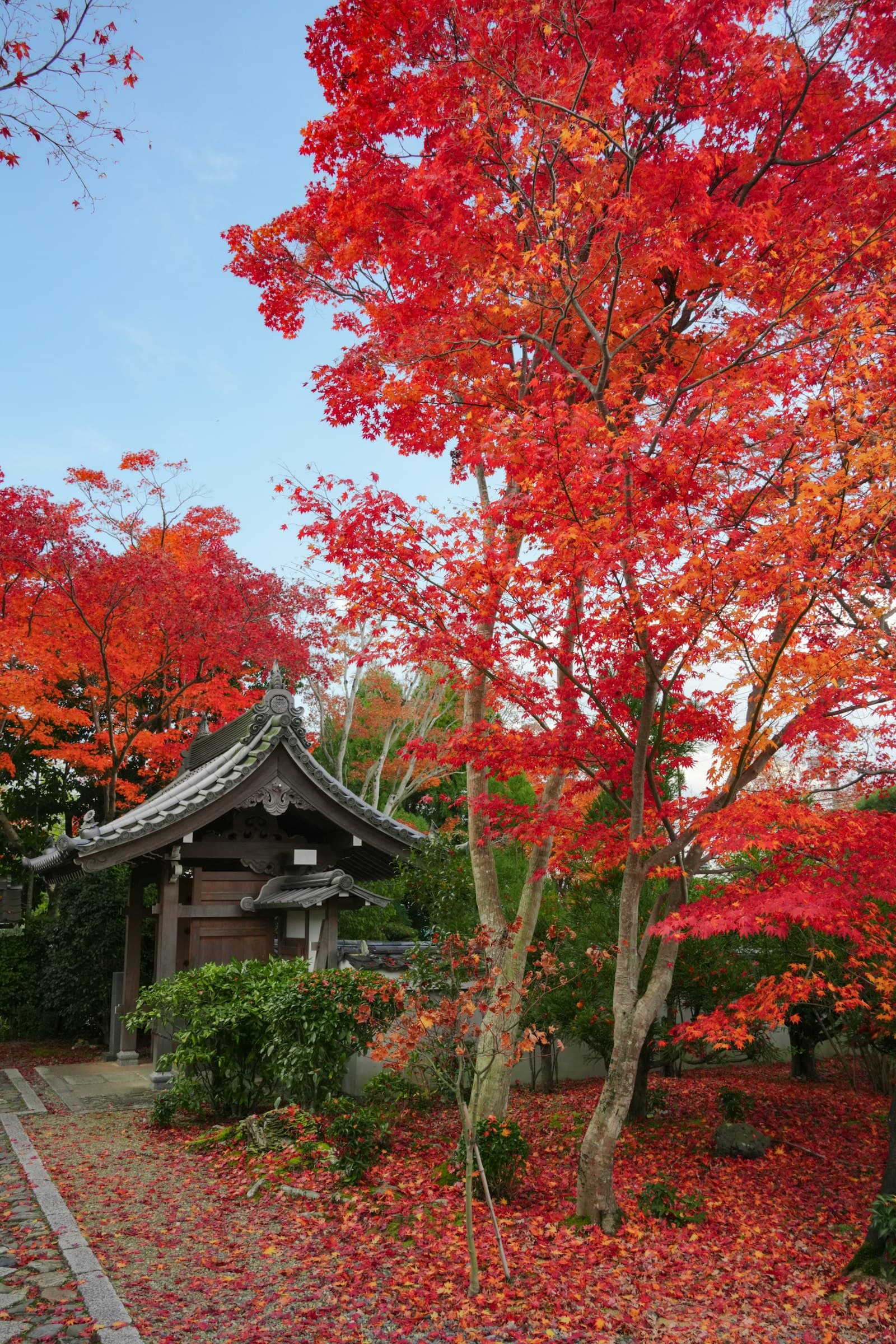
Japan Autumn Leaves Forecast 2026: Latest Dates City by City, and Where the Colors Are Now
Updated October 3: JMC's second forecast (October 1) puts Tokyo at November 28 and keeps Kyoto at December 11; tenki.jp's first forecast has Arashiyama from November 13; Weathernews has it from about November 23. City-by-city dates from all three forecasters, how to read them, region-by-region timing, and a flexible self-guided route.
If you're timing a trip around the Japan autumn leaves forecast 2026, here's the short answer: the Japan Meteorological Corporation published its second 2026 forecast on October 1, and it calls for peak red foliage in Tokyo on November 28, Osaka on December 4 and Kyoto on December 11 — all three "average" by JMC's own verdict; the only cities it calls later than average are Sapporo (+7 days), Nagano (+9) and Kochi (+7). For first-time routes through Tokyo, Hakone and Kyoto, that puts the safest window in late November to mid-December. Go earlier — late September through mid-October — if Hokkaido, Tohoku, Nikko or the Japanese Alps are your priority.
Why it's hard to give one date: the colors sweep southward (and from higher ground down), reaching Tokyo in late November and Kansai from late November into mid-December in a typical year (JMC's 2026 call has Kyoto's peak from December 11 — six days behind its average, which JMC still rates "average") and continuing into mid-December in Kyushu. Every region has its own window, and warm spells can shift the whole calendar by two weeks — as we saw in 2024 and 2025. This guide covers how to read the forecast, where to go week by week, and how to build a route that survives a curveball.
🍁 Quick Answer: Japan Autumn Leaves 2026
- JMC second forecast (Oct 1): Tokyo Nov 28 · Osaka Dec 4 · Kyoto Dec 11 · Nagoya Dec 2 · Sapporo Nov 4. Ginkgo: Tokyo Nov 26, Kyoto Nov 27.
- Safest window (Tokyo/Hakone/Kyoto): late November to mid-December 2026.
- Go early (Hokkaido/Tohoku/Nikko/Alps): late September – mid-October.
- Weathernews (Sept 3): peaks later or slightly later than average in many places — Arashiyama, Tofuku-ji and Nara from about Nov 23, Kenrokuen Nov 21, Hakone Nov 17.
- tenki.jp first forecast (Oct 1): "average or later than average" nationwide — Arashiyama from Nov 13, Miyajima Nov 18, Mt. Takao Nov 19, Nikko's Irohazaka Oct 21.
- Next update: JMC's third forecast is due in early November.
- Heads-up: warm autumns pushed 2024–2025 peaks 1–2 weeks late — build in flexibility, especially for Kyoto.
Latest — October 3, 2026
Where the 2026 Autumn Leaves Forecast Stands Now
- Three forecasts are out. The Japan Meteorological Corporation (JMC) published its second 2026 forecast on October 1, the same day tenki.jp (Japan Weather Association) published its first; Weathernews's first came on September 3.
- What changed in JMC's second forecast: very little. Tokyo moved a day earlier to November 28, Sapporo three days earlier to November 4 and Sendai a day earlier to November 24; Kyoto (December 11), Osaka (December 4), Nagoya (December 2) and Kanazawa (November 30) are unchanged. JMC now rates red foliage "average" in northern, eastern and western Japan alike.
- tenki.jp is a little more cautious: "average or later than average" nationwide, with some lowland spots in eastern and western Japan later than average because October and November are expected to stay warm. It also expects a brief cold snap in early October to bring the mountains of Hokkaido and Tohoku on early — it has Oirase Gorge from October 13 and Nikko's Irohazaka from October 21.
- What it means for your trip: nothing has moved for Tokyo, Hakone and Kyoto — late November to mid-December is still the window. JMC's third forecast is due in early November.
Update — October 1, 2026
JMC's Second 2026 Autumn Leaves Forecast: City by City
The Japan Meteorological Corporation released its second 2026 forecast on October 1. September ran at average temperatures in northern and eastern Japan and above average in the west; October to December are expected to stay warmer than usual. Even so, JMC now rates red foliage average in northern, eastern and western Japan, and flags only Sapporo, Nagano and Kochi as "later than average." Dates are the forecast start of peak red foliage (momiji), using the Japan Meteorological Agency's rule for its sample trees: the first day most of the tree's leaves have turned. The last column shows the change from JMC's first forecast of September 2.
| City | 2026 forecast | Average | vs. average (JMC verdict) | Since Sept 2 |
|---|---|---|---|---|
| Sapporo | Nov 4 | Oct 28 | +7 days — later than average | was Nov 7 |
| Aomori | Nov 13 | Nov 13 | 0 — average | unchanged |
| Sendai | Nov 24 | Nov 21 | +3 days — average | was Nov 25 |
| Nagano | Nov 21 | Nov 12 | +9 days — later than average | unchanged |
| Tokyo | Nov 28 | Nov 28 | 0 — average | was Nov 29 |
| Kanazawa | Nov 30 | Nov 24 | +6 days — average | unchanged |
| Nagoya | Dec 2 | Nov 28 | +4 days — average | unchanged |
| Kyoto | Dec 11 | Dec 5 | +6 days — average | unchanged |
| Osaka | Dec 4 | Dec 1 | +3 days — average | unchanged |
| Hiroshima | Nov 28 | Nov 22 | +6 days — average | unchanged |
| Kochi | Dec 9 | Dec 2 | +7 days — later than average | unchanged |
| Fukuoka | Dec 7 | Dec 1 | +6 days — average | unchanged |
Ginkgo (yellow leaves)
Ginkgo turns before the maples. JMC rates the yellow leaves "average or later than average" in northern and eastern Japan and "average" in the west; Fukuoka is the one city it calls later than average.
| City | Ginkgo forecast | vs. average (days) |
|---|---|---|
| Sapporo | Nov 3 | 0 |
| Sendai | Nov 29 | +6 |
| Tokyo | Nov 26 | +3 |
| Kanazawa | Nov 10 | 0 |
| Nagoya | Nov 17 | −1 |
| Kyoto | Nov 27 | +3 |
| Osaka | Nov 24 | +2 |
| Hiroshima | Nov 21 | +6 |
| Fukuoka | Nov 28 | +8 — later than average |
Source: Japan Meteorological Corporation, 2026 autumn leaves forecast, 2nd release (October 1, 2026). "Average" is JMC's long-run normal for each city; the verdicts are JMC's own. The next release is due in early November.
Third opinion — tenki.jp, October 1
tenki.jp 2026 Forecast: Spot by Spot
tenki.jp (Japan Weather Association, a separate organization from JMC) published its first 2026 forecast on October 1. Its national call: peaks average or later than average, roughly average in Hokkaido and Tohoku but later than average in some lowland spots of eastern and western Japan. Note that tenki.jp compares each spot with last year, not with the long-run average — and because 2024 and 2025 both ran late, "earlier than last year" can still mean a normal or late season.
| Spot | Peak from (2026) | 2025 | vs. last year |
|---|---|---|---|
| Oirase Gorge (Aomori) | Oct 13 | Oct 28 | earlier |
| Kamikochi | Oct 13 | Oct 14 | earlier |
| Jozankei Onsen (Sapporo) | Oct 15 | Oct 16 | earlier |
| Irohazaka (Nikko) | Oct 21 | Oct 23 | earlier |
| Onuma Park (Hokkaido) | Oct 22 | Oct 24 | earlier |
| Naruko Gorge (Miyagi) | Oct 23 | Oct 25 | earlier |
| Daisen (Tottori) | Oct 27 | Nov 4 | earlier |
| Shirakawa-go | Oct 30 | Oct 30 | same |
| Fukayabakei (Oita) | Nov 10 | Nov 13 | earlier |
| Kankakei (Shodoshima) | Nov 11 | Nov 11 | same |
| Arashiyama (Kyoto) | Nov 13 | Nov 13 | same |
| Korankei (Aichi) | Nov 16 | Nov 17 | earlier |
| Takachiho Gorge | Nov 16 | Nov 26 | earlier |
| Miyajima | Nov 18 | Nov 21 | earlier |
| Mt. Takao (Tokyo) | Nov 19 | Nov 11 | later |
Source: tenki.jp (Japan Weather Association), 2026 autumn leaves forecast, 1st release (October 1, 2026). Each company defines "peak" differently — tenki.jp's Arashiyama date (November 13), Weathernews's (about November 23) and JMC's Kyoto city date (December 11) measure different things — so follow one company's dates for a given spot rather than mixing them.
Second opinion — Weathernews
Weathernews 2026 Forecast: Spot by Spot
Weathernews published its first 2026 forecast on September 3. Its national call: peaks later or slightly later than average in many places. Its dates are for famous viewing spots rather than cities, and it defines peak as the period from when about 70% of a spot has colored until the leaves start to fall — which is why its Arashiyama date (about November 23) comes well before JMC's Kyoto city date (December 11). Read the two side by side: Weathernews tells you when a spot starts to look good; JMC's city date tells you when the maples in town have fully turned.
| Spot | Peak from (Weathernews) |
|---|---|
| Jozankei Onsen (Sapporo) | about Oct 15 |
| Irohazaka (Nikko) | Oct 31 |
| Hakone (Lake Ashi) | Nov 17 |
| Showa Kinen Park (Tokyo) | Nov 17 |
| Kenrokuen (Kanazawa) | about Nov 21 |
| Mt. Takao (Tokyo) | Nov 22 |
| Arashiyama (Kyoto) | about Nov 23 |
| Tofuku-ji (Kyoto) | Nov 23 |
| Nara Park | Nov 23 |
| Kiyomizu-dera (Kyoto) | Nov 25 |
| Minoo Park (Osaka) | Nov 25 |
| Meiji Jingu Gaien ginkgo avenue (Tokyo) | Nov 29 |
Source: Weathernews 2026 autumn leaves forecast, first release (September 3, 2026); dates as shown on its spot pages on September 28, 2026. Weathernews had not issued a second forecast as of October 2. Weathernews gives a regional verdict, not one per spot.
This page is the dates page. Two companions cover the rest:
- Best places to see autumn leaves in Japan — the nine spots, ranked, with access.
- Autumn in Japan: the season guide — weather by month, packing, food and a 12-day route.
How the Japan Autumn Foliage Forecast 2026 Works
Unlike cherry blossoms (which move north), autumn foliage spreads southward from Hokkaido and from higher ground to the cities below — a slow wave rolling down the country over about two and a half months, from mid-September in northern Hokkaido to mid-December in southern Kyushu. The Japanese word for leaf-watching is momijigari ("red-leaf hunting"); the colors themselves are koyo or momiji.
The most-watched predictions come from the Japan Meteorological Corporation (JMC), a private weather company. It estimates the "first day most of a sample tree's leaves turn red (or yellow)," tracking two waves separately: yellow ginkgo (late October) and red maple (early November). So chasing golden ginkgo in Tokyo means arriving a bit earlier than someone targeting deep-red maple temples in Kyoto. JMC's navigator covers roughly 700 viewing locations, in multiple languages including English, with around four updates as the season unfolds.
Why the 2026 Forecast Is Harder to Nail Than Usual
A reality check before you book non-refundable hotels: recent years have run wildly late because of warm autumns. In 2024, record September heat pushed red foliage in Tokyo to December 5 (tying the latest date ever) and Osaka to December 8; of 51 observed cities, 11 were predicted to set new "latest-ever" records. Late-November travelers showed up to green leaves in Kyoto.
2025 was similar — many cities turned 1–2 weeks behind average, especially Kyoto, Wakayama and Kochi; northern areas were mixed (Sapporo late, Aomori slightly early). The 2026 forecasts are calmer: JMC's second forecast (October 1) rates red foliage "average" across the country with Kyoto at December 11, while tenki.jp (also October 1) still says "average or later than average" because October and November are expected to stay warm. The takeaway: build flexibility in. Don't lock every night to a specific city, and watch JMC's early-November update.
💬 From our Japan travel team
The truth is, the best timing for autumn leaves can't be pinned down until the season itself draws near. At the same time, foliage season draws huge numbers of travelers from across Japan and around the world, which makes hotels and bullet-train seats genuinely hard to secure. We do take autumn-season inquiries for our self-guided tours, but the most popular dates can sell out quickly — so please reach out to us as early as you can.
Region-by-Region Timing for Autumn 2026
The long-run regional pattern — use it to see how the season moves across the country, then check the JMC city table above for how 2026 is tracking against it:
🍂 Peak foliage windows by region (long-run pattern)
| Region | Peak window | Standout spots |
|---|---|---|
| Hokkaido | mid-Sep – late Oct | Daisetsuzan/Asahidake, Sounkyo, Jozankei; Sapporo early Nov |
| Tohoku | early Oct – mid-Nov | Oirase Gorge & Lake Towada, Yamadera, Kakunodate |
| Nikko | early Oct – mid-Nov | Yumoto/Chugushi (Oct), Lake Chuzenji (mid-Oct), town (late Nov) |
| Japanese Alps / central | mid-Oct – mid-Nov | Kamikochi, Tateyama Kurobe, Shirakawa-go; Kenrokuen later |
| Mt. Fuji / Kawaguchiko | early – late Nov | Maple Corridor (festival Nov 7–29, illuminated to 21:00) |
| Tokyo | late Nov – early Dec (JMC 2026: Nov 28) | Rikugien, Koishikawa Korakuen, Meiji Jingu Gaien ginkgo, Mt. Takao |
| Kyoto / Nara / Osaka | late Nov – mid-Dec (JMC 2026: Osaka Dec 4, Kyoto Dec 11) | Eikando, Tofuku-ji, Kiyomizu-dera, Arashiyama, Ruriko-in |
| Hiroshima / Miyajima | mid – late Nov | Momijidani Park (~700 maples) at the foot of Mt. Misen |
| Kyushu / south | late Nov – mid-Dec | Mt. Aso, temples around Beppu, Fukuoka |
💡 Lake Chuzenji (1,269 m) peaks mid–late Oct; sightseeing boats loop hourly (1 hr, ¥1,850). Avoid the Irohazaka Winding Road on autumn weekends — go midweek or stay at Chuzenji Onsen.
First colour arrives roughly a month to six weeks ahead of peak: mid-September in Hokkaido, early October in Tohoku and the Alps, early November across Kanto, Kansai and the Setouchi, and mid-November in Kyushu. Note the direction of travel — warm autumns have pushed peaks later almost every year recently, so treat the windows above as the earliest reasonable date rather than the middle of one.
The windows above are the long-run regional pattern. JMC's second 2026 forecast (October 1, covering about 700 viewing spots) runs a few days behind the long-run averages in most cities — rated "average" everywhere except Sapporo, Nagano and Kochi — see the city table near the top of this page. The next release is due in early November, and this page is revised the same day.
📅 What the October 1 forecasts tell you
The October forecasts tell you whether the season is running earlier or later than average — and for 2026 the answer is average, leaning late: JMC rates every big city on a first-time route "average" (Kyoto and Fukuoka six days behind their averages), flags Sapporo, Nagano and Kochi as later than average, and tenki.jp expects some lowland spots to run late. They do not pin a date you can book against. In practice: use them to choose your week, book flights and one or two anchor hotels, then check JMC's early-November update before committing the day you actually stand under the maples.
Full regional guides
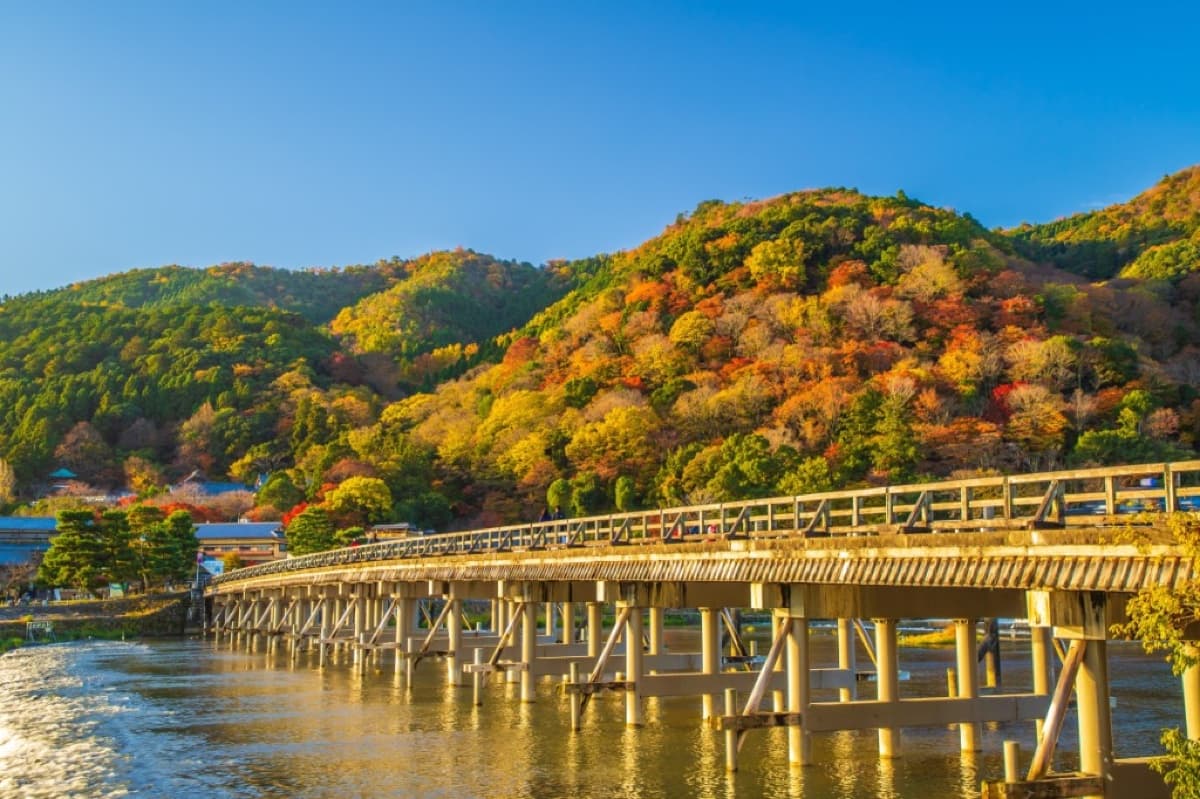
Each region above has its own spot-by-spot guide: Kyoto, Tokyo, Nikko, Hakone, Hokkaido, Tohoku, Mt. Fuji & Kawaguchiko, Arashiyama, Nara and Osaka.
Basing yourself at Lake Kawaguchi? Here's how to get to Kawaguchiko from Tokyo — buses, trains and the sightseeing loop.
A Practical Self-Guided Itinerary for Autumn 2026
A 10–12 day route that gives you the best shot at hitting peak foliage:
- Days 1–3 — Tokyo: Meiji Jingu Gaien ginkgo avenue, Rikugien, an easy hike up Mt. Takao.
- Day 4 — Nikko: prioritise if mid–late October (Oku-Nikko peaking). 2-hour Tobu train from Asakusa; overnight at Chuzenji Onsen to dodge Irohazaka traffic.
- Days 5–6 — Lake Kawaguchi + Hakone: the Maple Corridor (early Nov or later) plus an onsen night in Hakone.
- Days 7–8 — Kanazawa / Alps detour: Shirakawa-go and Kenrokuen (gold and red against the gassho houses).
- Days 9–11 — Kyoto: aim for December 8–21 (JMC's second 2026 forecast keeps Kyoto's peak from December 11). Early mornings only — Eikando and Tofuku-ji are punishing by 10am. Book ryokan months ahead.
- Day 12 — Osaka or Hiroshima/Miyajima: Itsukushima Shrine with autumn leaves is one of Japan's great photo moments.
For more, see our autumn in Japan 2026 and Kyoto autumn leaves guides, and weigh a pass with our JR Pass breakdown.
Tools to Monitor the Forecast
Don't rely on a single source — cross-check:
- Japan Meteorological Corporation (n-kishou.com) — the forecast this page follows; 2026 releases on September 2 and October 1, the next in early November.
- Weathernews (weathernews.jp) — spot-by-spot peak dates and live color reports; first 2026 forecast September 3.
- tenki.jp (Japan Weather Association) — a third national forecast with spot dates compared against last year; first 2026 forecast October 1. Its spot pages also carry live color status.
- Japan Guide's autumn color reports — weekly on-the-ground reports; genuinely useful in the last 2–3 weeks.
- Live cameras — several spots (e.g. Kawaguchiko.net runs a lake webcam).
- Local tourism X/Twitter feeds — often faster than English sites for "is it peaking yet?".
Common Mistakes Travelers Make
- Booking everything around the first forecast. Early forecasts can shift. Lock flights and one or two anchor hotels; keep the rest flexible.
- Assuming Kyoto peaks mid-November. JMC's second 2026 forecast keeps Kyoto at December 11 — put Kyoto at the end of your trip.
- Underestimating crowds. Arashiyama and Kiyomizu-dera are overwhelming at peak — go at 7am or pick lesser-known temples like Jojakko-ji or Hosen-in.
- Skipping Tohoku and Nikko. Nikko is a 2-hour train from Tokyo; Tohoku is on the Shinkansen — fewer crowds, arguably better scenery.
- Booking too late. Aim 6–12 months ahead; Kyoto ryokan for peak week (early-to-mid December in 2026) sell out a year out.
Self-Guided Routes for the 2026 Autumn Colour Season
The colour moves south for six weeks — Hokkaido in early October, the Japan Alps and Takayama in late October, Kyoto and Nara in the second half of November. These are the routes we run that follow it, with the month each one is built for.
| Route | Length | From (per person) | Why this autumn |
|---|---|---|---|
| Discover Hokkaido: Nature & Scenic Views (HD001) | 7 days | $3,700–4,300 | Sounkyo Gorge, Lake Akan and Shiretoko peak in early to mid October — the first colour of the season. |
| Scenic Southern Hokkaido Escape (HD002) | 7 days | $2,200–2,700 | Sapporo, Lake Toya and Hakodate in October, at the lowest price here. |
| Spirit of Tradition: Shirakawa-go & Cultural Japan (GR009) | 14 days | $4,100–5,900 | Takayama for its Autumn Festival (9–10 October), Shirakawa-go in late October, Kyoto and Nara in November. |
| Japan Highlights & World Heritage (GR002) | 12 days | $3,300–4,800 | Kyoto and Nara at peak colour in the second half of November. |
| Cultural Essence: Kyoto & Kanazawa Short Escape (GR006) | 12 days | $2,800–4,200 | Kenrokuen and Kyoto within the same fortnight; the lowest-priced twelve-day route we run. |
| Koyasan: Sacred Sites and Quiet Beauty (KM003) | 12 days | $3,500–5,200 | Koyasan’s maples turn in early November. Departures run April to November. |
| Hot Springs & Highlights: Kinosaki & Gero (HS002) | 14 days | $4,300–5,700 | Kinosaki’s crab season opens on 7 November — colour by day, crab and the outdoor baths by night. |
Interested in a tour? Click the route name above, or search by route code in the top-right Search bar.
For the month itself, see Japan in October 2026 and Japan in November 2026; for the beds that sell out first in colour season, where to stay in Kyoto names the hotels our routes actually book.
Prices are per person on a twin-share basis from our current price list and move with the departure date; departure windows are as the catalogue listed them on 22 September 2026. Ask us for an exact quote for your dates.
Japan Trip Cost Calculator (2026)
Set your trip below — the estimate updates instantly. Yen prices are converted at a rounded ¥150 to the dollar; the market rate is about ¥157 in September 2026, which makes yen costs a few percent cheaper than shown.
Intercity is priced as point-to-point tickets unless you add the pass — on the Tokyo–Kyoto–Osaka route the pass usually costs more than the tickets.
Estimated total
$4,530
$2,265/person · $453/day · 2 travelers, 10 days
Estimate only — a mid-range guide, not a binding quote. Peak season & specific hotels shift the total.
For comparison, our self-guided routes run about $270–390 per person per day with hotels, trains, luggage delivery and 24/7 support included — the difference from a DIY estimate is the hotel class and having it all arranged.
Planning a trip for Japan's autumn colors and not sure which week to book? Get in touch through Plan My Trip on our self-guided tours site, and we'll suggest the tours that best fit your dates and plans.
FAQ: Japan Autumn Leaves Forecast 2026
When is the best time to visit Japan for autumn foliage in 2026?
For most first-time routes (Tokyo, Hakone, Kyoto), late November to mid-December 2026: JMC's second forecast (October 1) puts Tokyo at November 28 and Kyoto at December 11. Go earlier — late September to mid-October — for Hokkaido, Tohoku, Nikko or the Japanese Alps.
When does the official 2026 fall foliage forecast come out?
All three are out. The Japan Meteorological Corporation released its first 2026 forecast on September 2 and its second on October 1; Weathernews published its first on September 3, and tenki.jp its first on October 1. JMC's next update is scheduled for early November.
Will the 2026 season be late again?
Only slightly. JMC's second forecast rates red foliage "average" across Japan and flags just Sapporo (November 4, seven days late), Nagano (November 21, nine days late) and Kochi (December 9, seven days late) as later than average; Tokyo (November 28), Osaka (December 4) and Kyoto (December 11, six days behind its average) are rated average. tenki.jp is a little more cautious, expecting some lowland spots in eastern and western Japan to run later than average.
Can I see autumn colors in Hokkaido in September?
Yes, at higher elevations. In 2026 the Daisetsuzan peaks turned in mid-September; by September 28 Kurodake was at peak around its 5th station and past it at the summit, and Asahidake's Sugatami Pond was losing its leaves. Sounkyo and the lower valleys turn in early October, and Sapporo city peaks in early November (JMC: November 4).
How long does peak foliage last in one spot?
Usually about 1–2 weeks, occasionally longer if it stays cool; an early frost or windstorm can cut it short. Across a region, the peak can span two weeks to more than a month.
What's the difference between koyo and momiji?
Both mean autumn leaves. Koyo (紅葉) is the general term; momiji specifically points to Japanese maples and the pastime of viewing them — momijigari is the autumn cousin of hanami.
Turn the Forecast Into a Route
Reading forecasts is one thing; turning them into a working itinerary with trains, ryokan and backup plans is another. We match your dates to the regions most likely to be peaking, build in flexibility around the JMC updates, and steer you clear of the worst crowd traps.
City dates from the Japan Meteorological Corporation's second 2026 autumn leaves forecast (October 1, 2026); regional windows are long-run averages. JMC's next update is due in early November and this page is revised with each release. tenki.jp spot dates from its first 2026 forecast (October 1, 2026); Weathernews spot dates from its first 2026 forecast (September 3, 2026) as shown on its spot pages on September 28; Hokkaido status from the Kurodake Ropeway and Weathernews on September 25–28. Confirm current conditions before booking non-refundable stays. Last updated: October 3, 2026.
Related Articles
Seasons in Japan: What Season It Is Right Now, Month-by-Month Weather & the Best Time for Each Trip
16 min read
Osaka Autumn Leaves 2026: Peak Dates, Minoo Park & Why It Beats Kyoto as a Base
15 min read
Tokyo Autumn Leaves 2026: Peak Dates, Best Spots & a Day-Trip Plan
14 min read