
Japan in July 2026: Festivals, Heat & a Self-Guided Itinerary
July is Japan's peak festival month — Gion Matsuri, Tenjin Matsuri, and the Sumida River Fireworks — wrapped in serious heat and the tail of the rainy season. Here's how to plan around both.
July is, honestly, one of the loudest, sweatiest, and most rewarding months to visit Japan. If you're weighing up Japan in July 2026, the short answer is: yes, go — but build your trip around the festivals and the heat, not against them. The country is at its cultural peak, with Gion Matsuri running the entire month in Kyoto, Tenjin Matsuri lighting up Osaka on July 24–25, and Tokyo's Sumida River Fireworks closing the month on July 25. Planning for 2027? Japan in July 2027 has the confirmed Gion parade dates (Saturday 17 and Saturday 24 July) and the rest of the month.
The trade-off? The first half of July is still rainy season in most of Honshu, and the second half flips into bright, scorching summer with humidity around 80% that can make 30°C feel above 40°C. Plan for both. This guide pulls together the 2026 dates (all now past — the same fixed calendar applies to July 2027), what to pack, where to base yourself, and how to slot the big events into a self-guided itinerary.
Quick Answer: Japan in July 2026
July is peak festival season but hot and humid. Rainy season ends ~July 20. Headline dates: Gion Matsuri parades July 17 & 24, Tenjin Matsuri July 24–25, Sumida River Fireworks July 25, and Mt Fuji climbing opens July 1. Escape the heat in Hokkaido or the Japanese Alps.
Weather
Hot, humid
Rainy season ends
~Jul 20
Big week
Jul 24–25
Cool escape
Hokkaido
Japan Weather July 2026: What to Expect
There are really two halves to the month. Early July is the tail end of the rainy season (tsuyu) — frequent showers and occasional heavy downpours, though it rarely rains all day. Bring a compact folding umbrella (convenience stores sell them for ¥500–¥800 if you forget).
Mid-to-late July, once the rainy season ends around July 20, the clouds disappear and the heat takes over. Expect higher-than-average temperatures, with urban heat islands like Tokyo and Osaka peaking around 35°C (95°F) and a heat index that feels even higher.
Typical July conditions by region
| Region | High / Low | Note |
|---|---|---|
| Tokyo | 29°C / 23°C | ~77% humidity, heat index ~35°C |
| Kyoto | 31°C / 24°C | Basin traps heat — feels worse |
| Osaka | 32°C / 25°C | Hot and humid all month |
| Sapporo | 25°C / 17°C | Cool, low humidity — the escape |
For the bigger heat picture, see our Japan heatwave 2026 guide. For the rainy-season timing, see Japan rainy season 2026.
Gion Matsuri 2026: Kyoto's Month-Long Centerpiece
July, as the heat starts to build, is a season to enjoy the Japanese summer at its best — and my personal recommendation is to join one of the festivals held at this time of year. The vivid colors and lively atmosphere of a matsuri tend to become one of the most unforgettable memories of a Japan trip. And a bowl of kakigori (shaved ice) from a festival food stall blows the summer heat away in an instant.
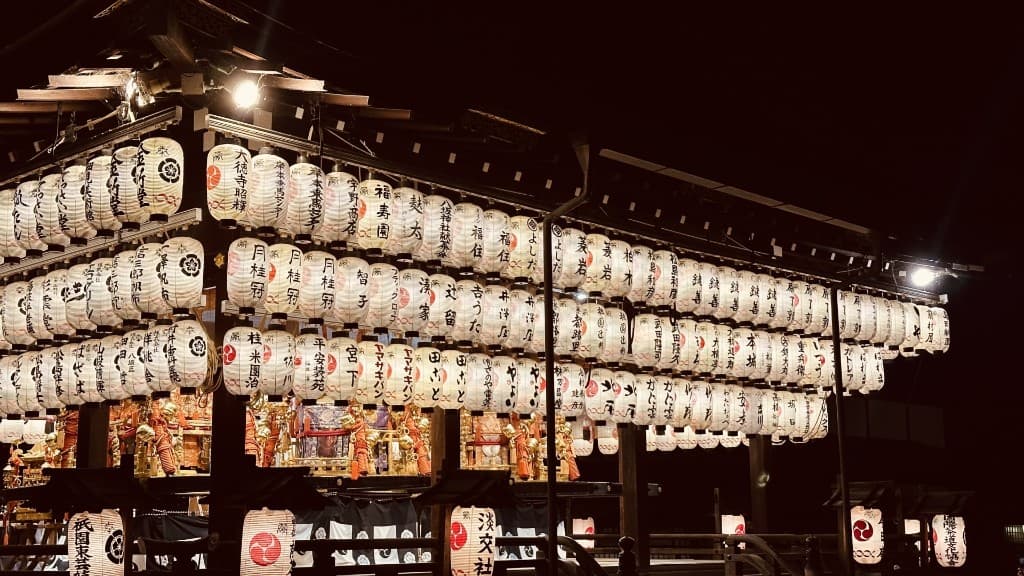
If there's a single reason to visit Japan in July, this is it. Gion Matsuri runs the entire month, but the headline events cluster around two grand processions of yamaboko floats.
- Yoiyama (pre-festival evenings): July 14–16
- Yamaboko Junko (Saki Matsuri grand parade): July 17 — 23 floats, the bigger, more famous procession (9:00–13:00)
- Yoiyama (latter evenings): July 21–23
- Yamaboko Junko (Ato Matsuri parade): July 24 — 11 floats (9:30–11:50)
The yoiyama evenings are where the magic lives — downtown streets around Shijo, Karasuma, and Kawaramachi close to traffic, food stalls sizzle, and locals wander under lanterns in yukata. The floats themselves are "moving museums": of the 33 main yamaboko, 29 are designated Important Tangible Cultural Properties, draped in centuries-old tapestries.
Paid seats exist for both parade days on Oike-dori (2026: ¥6,000, or ¥8,000 for the front row; advance booking required) and sell out fast. Book Kyoto hotels six months ahead — Gion week rivals cherry-blossom season for demand. If central Kyoto is full, base in Osaka (15 minutes from Kyoto by Shinkansen). Yasaka Shrine, the festival's patron shrine, sits at the east end of Shijo-dori near Gion-Shijo Station.
Tenjin Matsuri: Osaka's Fire and Water Show
One of Japan's top three festivals, held annually on July 24–25 at Osaka Tenmangu Shrine. The climax is the evening of July 25: a land procession of mikoshi in Heian-period costume starts around 3:30pm, then continues onto boats on the Okawa River from about 6pm, capped by a fireworks finale over the water. Arrive early, find a riverbank spot near Tenmabashi Bridge, and bring water.
Full guide: Tenjin Matsuri 2026 — verified schedule, the boat procession route, and exactly where to watch the fireworks.
Sumida River Fireworks 2026
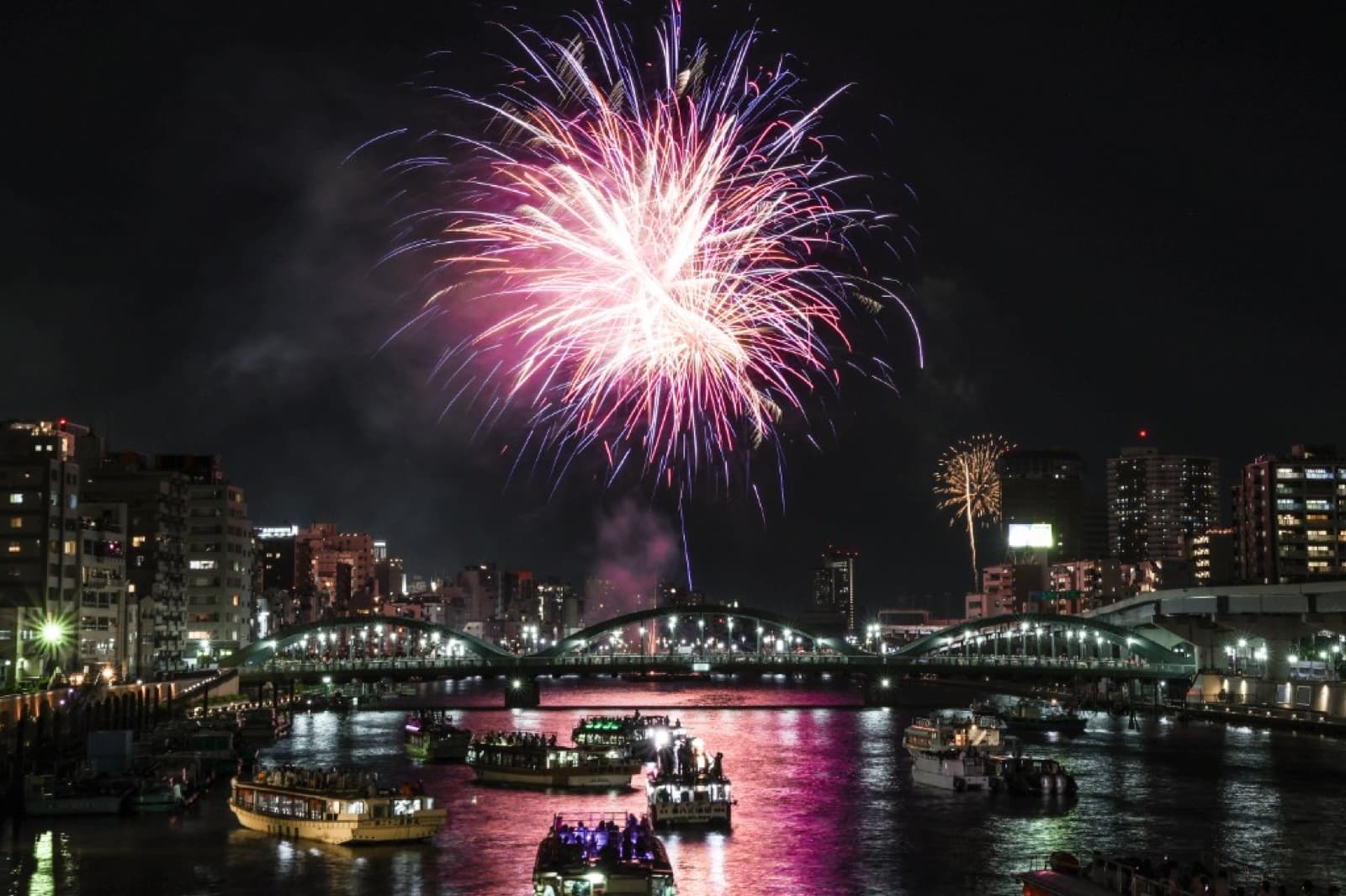
Tokyo's most iconic hanabi, on Saturday, July 25, 2026 (7:00–8:30pm) — the last Saturday of July. Around 20,000 shells launch from two sites near Asakusa and Tokyo Skytree (Sakura Bridge and Komagata Bridge). Venue 1 is 15 minutes' walk from Asakusa Station; Venue 2 is 5 minutes from Kuramae Station.
Heads up: July 25 is a double-booking
Both the Sumida River Fireworks (Tokyo) and Tenjin Matsuri (Osaka) fall on the same Saturday, July 25, 2026. You can't do both — pick your city and plan around it. For more hanabi dates nationwide, see our Japan fireworks 2026 guide.
Other July Highlights
Tanabata Star Festival
The star festival is celebrated nationally on July 7, with local festivals through early July — wishes hung on bamboo, food stalls, lanterns. Tokyo's Shitamachi Tanabata decorations go up July 3–7 along Kappabashi Hondori between Asakusa and Ueno.
Mount Fuji Climbing Opens
The Yoshida and Subashiri trails open July 1; Fujinomiya and Gotemba (and the crater-rim walk) open July 10. All four now require a mandatory ¥4,000 entry fee and online reservation, and the Yoshida gate closes 2pm–3am for anyone without a hut booking. Full details in our Climbing Mt Fuji 2026 guide. Not climbing? The views from Lake Kawaguchiko alone are worth the side trip.
Marine Day & Hokkaido Lavender
Marine Day (Umi no Hi), a national holiday, falls on the third Monday — July 20, 2026 — so expect busy beaches and attractions. Up north, the lavender fields of Furano peak in mid-July, and Hokkaido stays a comfortable 25°C.
Price a July 2026 Trip Before You Ask for a Quote
The calculator below is the same one on our cost guide. Set the party, the length and the season, and use the button to turn the estimate into a real quote.
Japan Trip Cost Calculator (2026)
Set your trip below — the estimate updates instantly. Yen prices are converted at a rounded ¥150 to the dollar; the market rate is about ¥157 in September 2026, which makes yen costs a few percent cheaper than shown.
Intercity is priced as point-to-point tickets unless you add the pass — on the Tokyo–Kyoto–Osaka route the pass usually costs more than the tickets.
Estimated total
$4,530
$2,265/person · $453/day · 2 travelers, 10 days
Estimate only — a mid-range guide, not a binding quote. Peak season & specific hotels shift the total.
For comparison, our self-guided routes run about $270–390 per person per day with hotels, trains, luggage delivery and 24/7 support included — the difference from a DIY estimate is the hotel class and having it all arranged.
A Self-Guided July Itinerary (Alpine Route Edition)
This route deliberately threads in cooler, higher-altitude stops — Matsumoto, Toyama, and the Tateyama Kurobe Alpine Route — to break up the lowland city heat, before finishing with the big Kansai festivals.
- Tokyo (2 nights). Senso-ji, Shibuya, Roppongi museums, Skytree. Outdoor walks before 10am and after 5pm; indoor AC midday.
- Matsumoto (1 night). Matsumoto Castle and a cooler night in the Japanese Alps foothills — a welcome break from city humidity.
- Toyama (1 night). Ride the Tateyama Kurobe Alpine Route, where high-altitude air and lingering snow walls make this one of the coolest, most scenic stops of any summer trip.
- Kanazawa (2 nights). Kenrokuen Garden, the Higashi Chaya district, and fresh seafood at Omicho Market.
- Kyoto (2 nights). Time it around July 14–17 or 21–24 for Gion Matsuri. Early mornings for Arashiyama, Fushimi Inari, and Kinkaku-ji; yoiyama evenings for festival immersion.
- Osaka (2 nights). If you overlap July 24–25, you're in for Tenjin Matsuri. Otherwise Dotonbori, Osaka Castle, and Universal Studios.
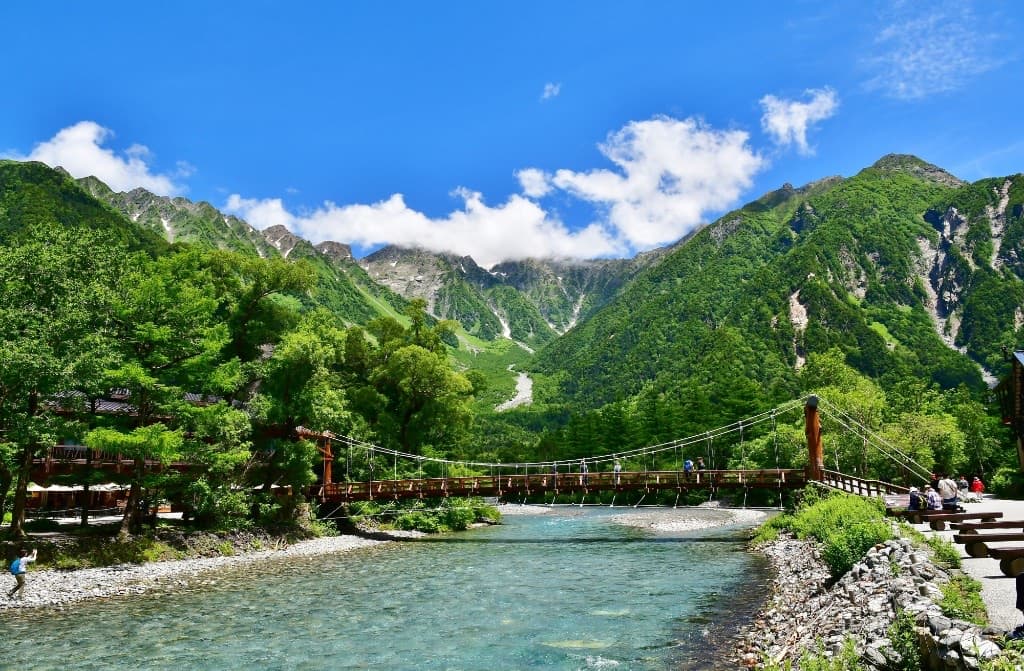
This is exactly the kind of heat-aware routing the alpine self-guided tours below are built around. Heat-sensitive travelers can also lean further north — Hokkaido and more of the Japanese Alps (Kamikochi, Takayama) run far cooler. Compare with our Japan in August 2026 and best time to visit Japan 2026 guides.
What to Pack for Japan in July
- Light, breathable clothing (linen, cotton, quick-dry) in pale colors
- Compact folding umbrella (sun and rain)
- Wide-brim hat, high-SPF sunscreen, sunglasses
- Hand towel, cooling sheets, and a portable fan
- Reusable water bottle + electrolyte tablets or Pocari Sweat
- One light layer for over-air-conditioned trains and malls
- Breathable walking shoes (slip-on style helps at temples/ryokan)
Common Mistakes to Avoid
- Booking Kyoto hotels too late for mid-July. Yoiyama week sells out 6–12 months ahead.
- Trying to see both Sumida and Tenjin on July 25. They overlap — pick one.
- Assuming rainy season means all-day rain. It rains in bursts; a folding umbrella plus flexibility beats hiding indoors.
- Overpacking the itinerary. Two to three activities per day max — the heat compresses your stamina.
- Forgetting cash. Festival stalls, mountain huts, and many shrines are cash only.
If July Is Too Hot: The Months That Solve It
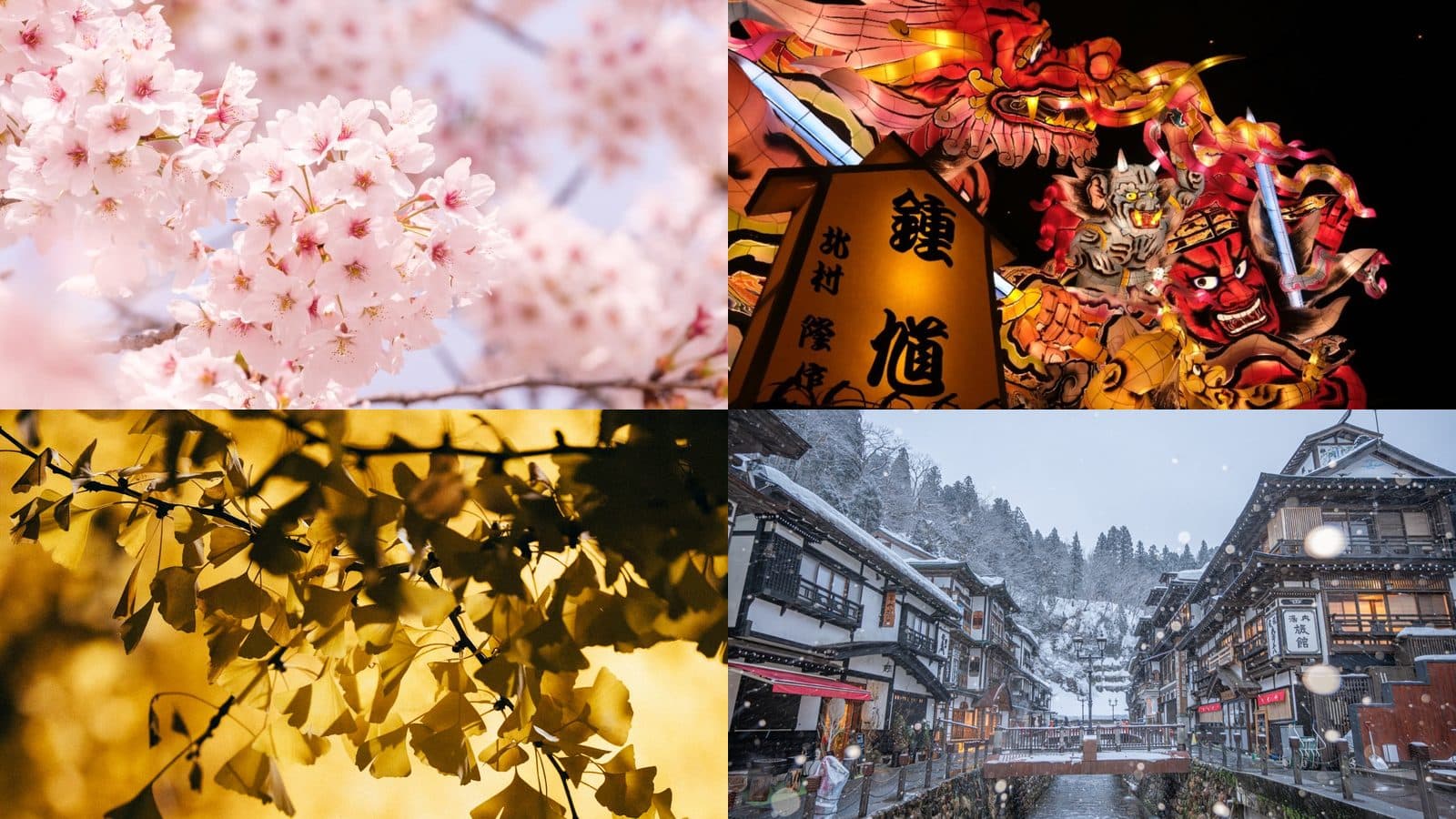
Not sure which month suits you? Our guide to the seasons in Japan lines up all twelve months side by side — weather, crowds, prices and what is in bloom.
July is Japan at its most humid, and for a lot of visitors that single factor outweighs the festivals. The heat does not break until late September, so if you can move your dates at all, moving them later is almost always the right call.
- October and November — the two months experienced repeat visitors pick most often. See October and November.
- Comparing the whole year — best time to visit Japan weighs weather against crowds and cost, and trip costs shows how much the month changes the total.
- Committed to summer? Japan's summer festivals are the reason to endure it, and current conditions covers heat and typhoon risk.
Planning a summer trip to Japan? Get in touch through Plan My Trip on our self-guided tours site, and we'll suggest the tours that best fit your dates and plans.
FAQ: Japan in July 2026
Is July a good time to visit Japan?
Yes, if you can handle humidity and heat. July offers the country's most famous summer festivals, Mt Fuji climbing season, fireworks nearly every weekend, and lavender in Hokkaido. The trade-off is humid weather and frequent rain in early July.
When does Japan's rainy season end in 2026?
Typically around July 20 in most of Honshu, though it varies by region. Okinawa's ends in late June; Hokkaido barely has one.
What are the must-see Gion Matsuri 2026 dates?
The Yoiyama evenings on July 14–16 and 21–23, plus the grand parades on July 17 (23 floats) and July 24 (11 floats). If you pick one day, aim for July 16 Yoiyama plus the July 17 procession.
When is the Sumida River Fireworks Festival in 2026?
Saturday, July 25, 2026, from 7:00pm to 8:30pm — the same evening as Osaka's Tenjin Matsuri.
How hot does it actually get?
Tokyo averages 29°C highs with ~77% humidity. Kyoto and Osaka run hotter, often 32–35°C in late July, with a heat index that can feel above 40°C.
Can I climb Mount Fuji in early July 2026?
Yes — the Yoshida and Subashiri trails open July 1, Fujinomiya and Gotemba July 10. You must register and pay the ¥4,000 fee online in advance.
Is the Japanese Alps or Hokkaido a good summer escape?
Yes. Hokkaido in July is around 25°C with low humidity, and the Japanese Alps (Kamikochi, Takayama) run noticeably cooler than central cities, with mountain hot springs.
Related Articles
Seasons in Japan: What Season It Is Right Now, Month-by-Month Weather & the Best Time for Each Trip
16 min read
Tokyo Fireworks Festivals 2026: Sumida, Katsushika & Edogawa Dates + Viewing Spots
12 min read
Where to Go in Japan Summer 2026: Cool Places, Mountains & Real Itineraries
16 min read